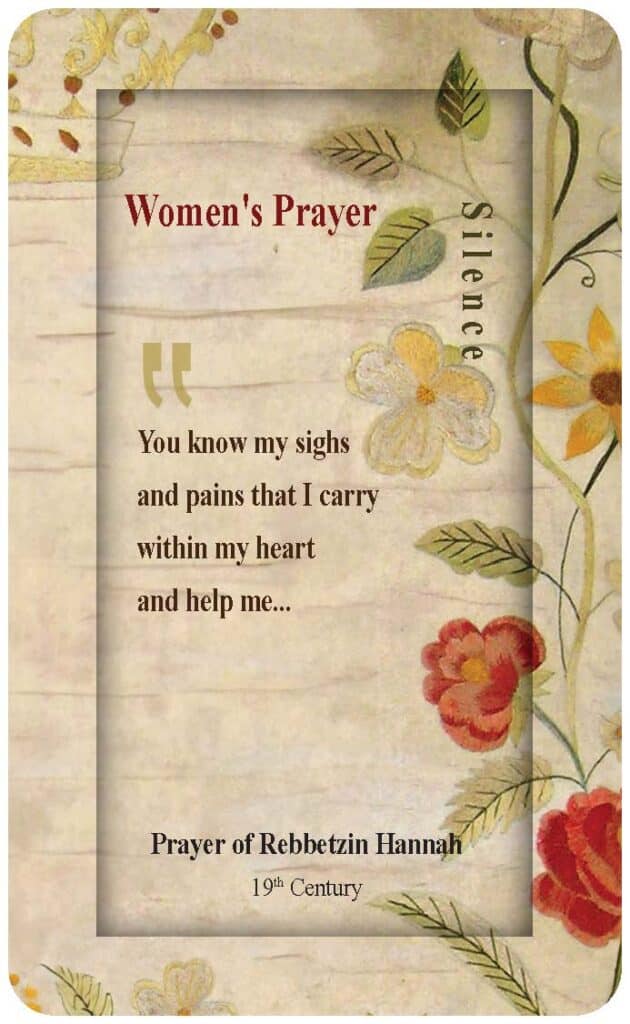
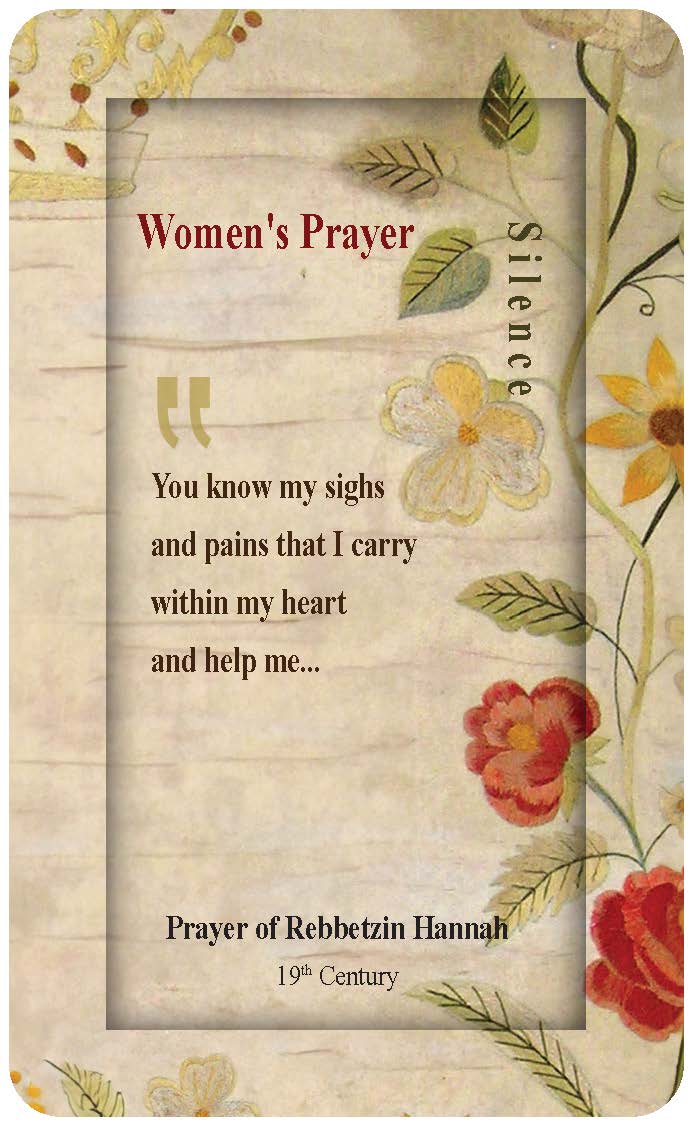
Prayer of Rebbetzin Hannah, 19th Century
word of inspiration: Silence
The supplication Gates of Tears, attributed to Rebbetzin Hannah, is written in poetic and sensitive language.
“You know the broken hearts, You know my sighs…”
This is not an abstract prayer, it is a quiet cry, a personal voice spoken from an open heart, seeking recognition, compassion and meaning.
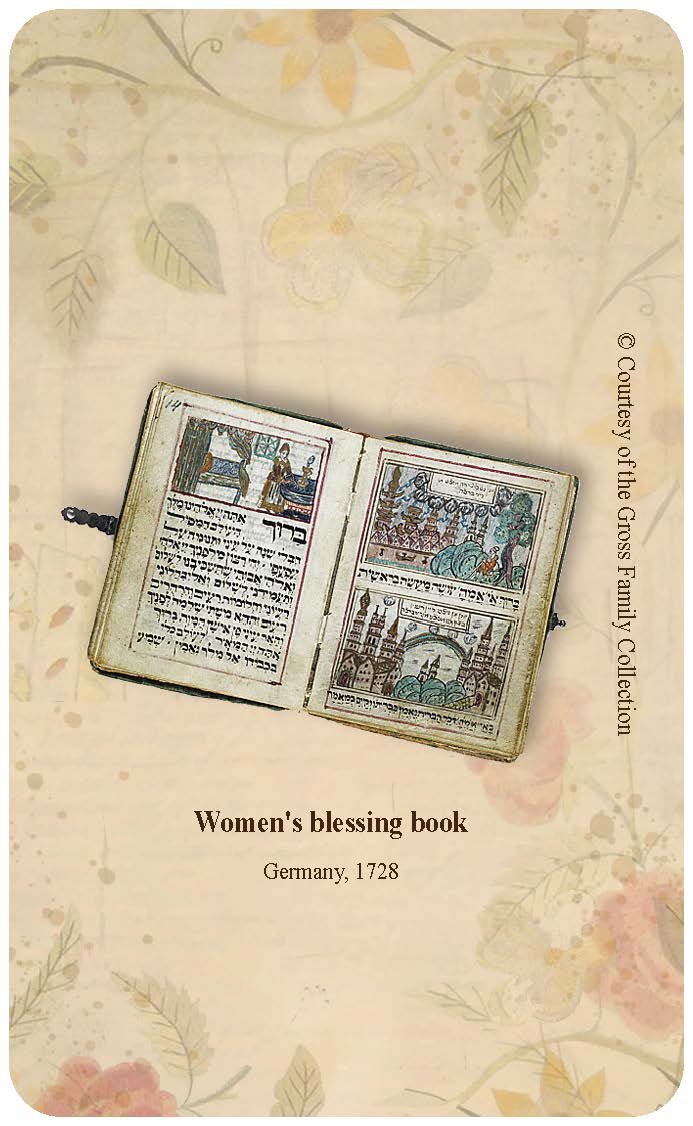
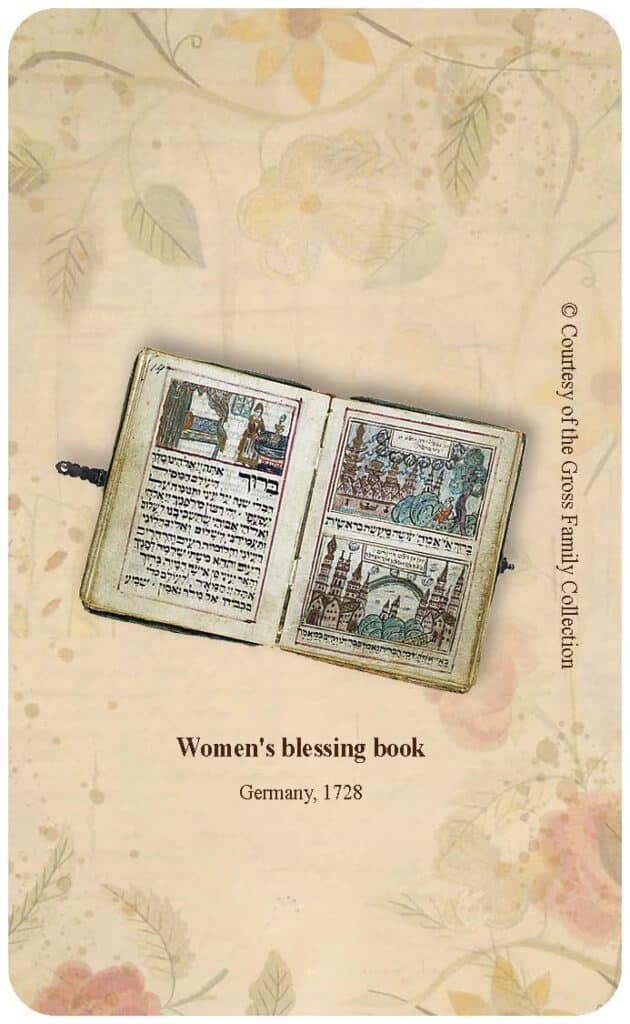
Techinot, supplication (in Yiddish: Tchines) are personal prayers written by women or for them. They were recited by Jewish women beginning in the 17th century, mainly in Ashkenazy communities. Many women were not fluent in Hebrew. And Yiddish, the spoken language of the home, became a spiritual tool
that connected and strengthened.
As early as the 16th century, Yiddish translations of the Torah, the Haftarot and the Megillot were printed. The Tze’enah Ure’enah (“go forth and see”,
a Torah book in Yiddish) was especially beloved among women.
Alongside it, the techinah, the supplication, was a personal-feminine dialogue,
containing words of longing, pain, gratitude
and hope, spoken in the language of the heart.
The supplications were composed around two main cycles. First, the cycle of the year: holidays, Sabbaths and special days. And the second, the cycle of life: marriage and love, childbirth, raising children, candle lighting, purification, livelihood and peace in the home.
With the rise of the Haskalah movement (the Enlightenment movement), the status of Yiddish declined in Western Europe, yet the world of techinot continued, and sometimes even expanded. Even today, in many Hasidic communities, techinot are still being written and recited.