Morocco, 18th century
Word of Inspiration: Connection
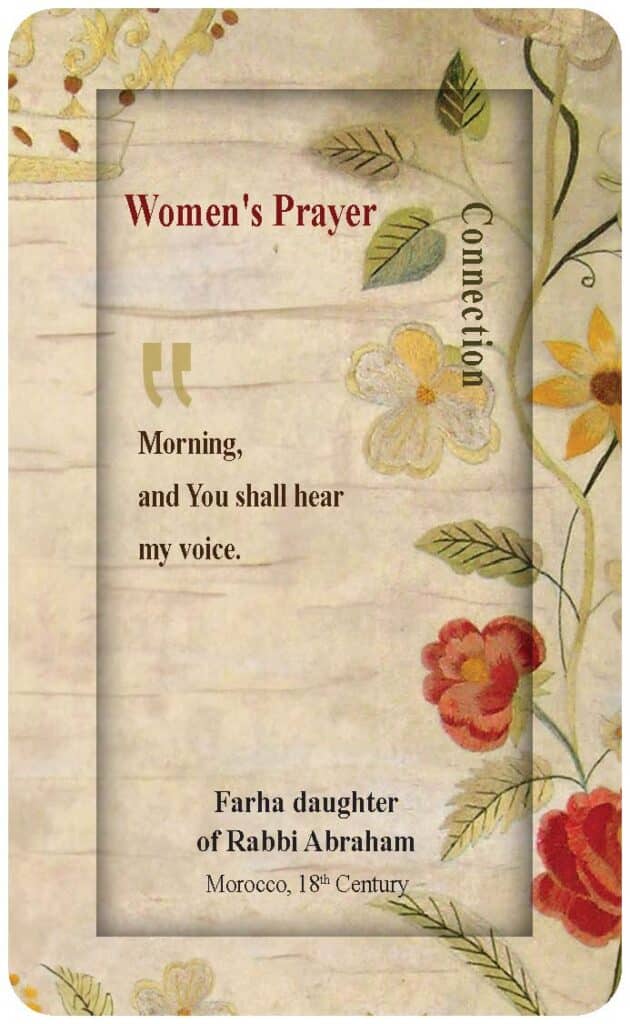
In 18th-century Morocco lived and wrote Freha bat Rabbi Avraham, also known by her pen name “Bat Yosef” (daughter of Yoshef). A Hebrew poetess and learned woman, she was considered a spiritual figure and a scholar in Halakha. Her generation called her “the Rabbanit”, not only because of her lineage, but due to her faith, wisdom, greatness in Torah and her ability to speak both to the heavens and to the hearts.
Freha wrote poetry and prayer in Hebrew, leaving behind personal and communal liturgical poems that serve as living testimony to women who studied, created and wrote in the holy language. Some of her writings have been lost, only a few have survived, passed down through prayer, memory and research.
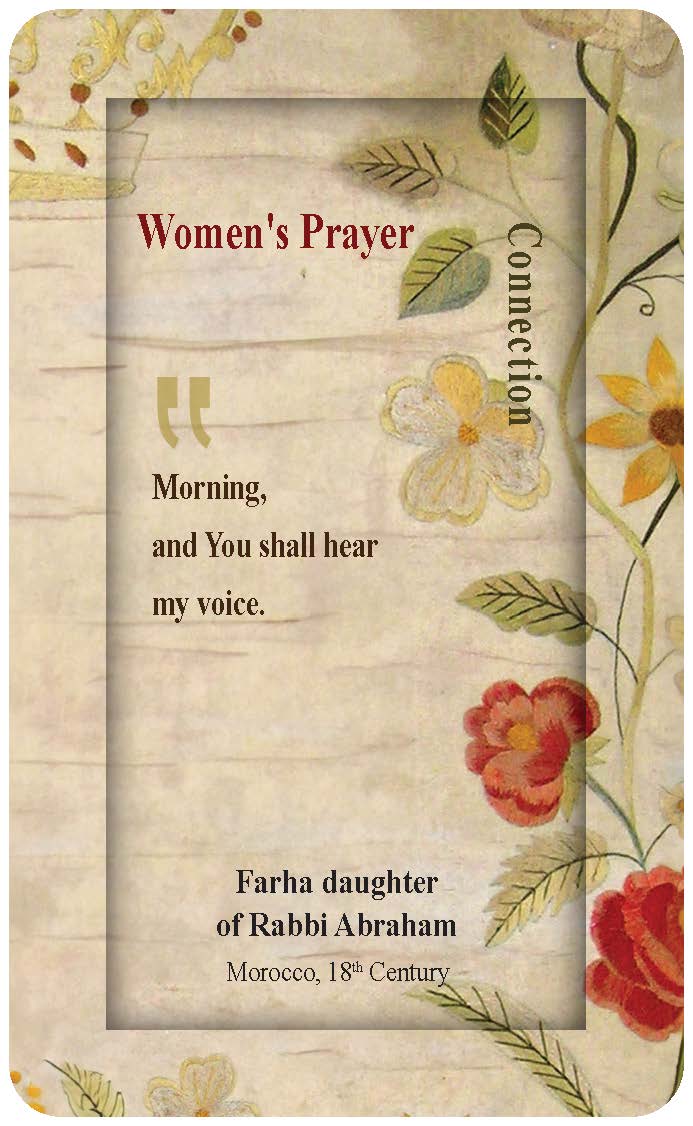
The phrase written on the card, Morning, and You shall hear my voice, is taken from the liturgical poem of request to face us with mercy, composed by Freha.
The liturgical poem was intended for weekday Shacharit prayer (morning prayer).
Weekday requests addressed two main themes: a plea for redemption and a plea to walk in the way of Torah and mitzvot.
The ancient liturgical poem face us with mercy includes both the collective and individual prayers: a request for hastened redemption, for the return to Zion and the rebuilding of the Temple and also for forgiveness,
grace and personal closeness.