Share:

Facebook
LinkedIn
WhatsApp

The Haggadah of Freedom” by Toby Turkeltaub from Munkacs

The eve of Passover, 1945. Two young women are marching in the death march from Auschwitz to the borders of Old Germany. Two friends from the city of Munkacs in Hungary:
Toby Turkeltaub and Aliza Klein. The Germans are massacring the Jews who drag themselves
with their remaining strength. Only a few of them will survive. Toby did not live to see liberation;
Aliza did.

Moments before her death, Toby handed her friend a tiny booklet with a blue cloth cover,
its inside made of folded toilet paper. Aliza would never know where Toby obtained cloth
and toilet paper in the camp. On the cover, Toby embroidered letters using threads she unraveled from her prisoner uniform. All around it, she created a border; on the top right,
she embroidered “Zion,” and in the center, a map. A map of the Land of Israel, with its familiar contours: the Bay of Haifa, the Sea of Galilee, the Dead Sea. And inside the booklet,
page after page, written and vocalized with vowel points in her meticulous handwriting.

Years passed before Aliza recognized the map on the cover and learned to read what was written in the booklet. For more than half a century, her friend’s gift remained among her personal belongings, until she finally decided to hand over the inheritance to a Holocaust documentation institution. Only then did she realize what she had been holding in her hand:
a Passover Haggadah. Not the standard, familiar Haggadah of her childhood home,
but a personal plea to the Creator of the Universe. “Vehigadeta” (And you shall tell) in the spirit of the times.

“Toby was deeply religious,” Aliza Klein later recounted, “and in order not to forget the holidays, she made herself a Jewish calendar. That is how she knew when Hanukkah, Purim,
and Passover were approaching.” And that is also how she knew to write at the top of the first page, for generations to come, that these words were written on Passover 5705,
meaning the year 1945.
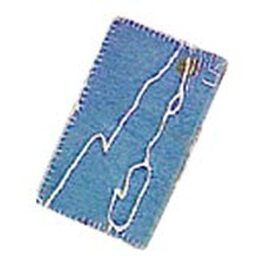
A Haggadah of six lines with a map of the Land of Israel on it.
Toby Turkeltaub, Auschwitz.

“The Haggadah of Freedom”

Toby Turkeltaub from Munkacs

We want to celebrate but we cannot, we wish to believe, and the only thing we have,
which they cannot take from us, is memory.

Only this can give us hope for a better and more beautiful future,
about which we want to think and not bow our heads.

And if God redeemed our ancestors from Egypt, He will also save us from our bitter slavery
and return us to the land of our ancestors.

The eve of Passover 5705, 1945

Aliza Lavie, published in Haaretz newspaper

Toby and her story returned home, to the land she never reached but hoped to reach,
through many families in Israel and communities that adopted her prayer and add
it to the Haggadah on Seder night. And through many young people who include her prayer
in ceremonies held at the death camps in Poland.

And as my daughter Arbel told me: “Mom, Toby has become a celebrity. All of us at Auschwitz, on a Holocaust journey, recited her prayer together.”

Hungary was one of the last countries to be conquered in World War II. By Eichmann’s order,
the “Jewish Council” was established in March 1944, comprising eight representatives from different streams of the Hungarian Jewish community. Between March 1944 and January 1945, 618,000 Jews perished in Hungary, of whom about 450,000 were in Auschwitz.

Toby Turkeltaub’s Passover Haggadah testifies that she knew Hebrew and was intimately familiar with the story of the Haggadah. Her strong faith bursts forth from the words.

About Us | Women's Prayer Project

The “Women’s Prayer” project began two decades ago as a book that documented and collected Jewish women’s prayers throughout history. The book, which became a bestseller, revealed an entire world that had almost disappeared from our sight – a breathing and vibrant Jewish-feminine space that reflects a Jewish life story that was almost never told through conventional historical tools.

Today, marking 20 years since the book’s publication, we are proud to expand the project to a new format of prayer cards, combining the ancient prayers together with images from a stunning Judaica collection (courtesy of the William Gross Collection, photography: Arnon Barmucha).

The cards are intended for daily use, personal contemplation, family ceremonies and community activities – they invite us to return and reconnect with the rich feminine tradition that passed from mother to daughter throughout the generations.

Our Books

Women’s Prayer Cards (Tefilat Nashim) We use cookies to ensure the website functions properly and improve user experience. You can choose which types of cookies to enable.
Cookie Selection


Join us for women's prayer

A connection to the Jewish story through women’s voices
Join to receive sources, prayers, rituals and stories from the Jewish female tradition.