Font "Noa" - Handwriting That Became Living Letters
On this website, we use a special font created from the handwriting of Lookout Noa z”l, who fell on October 7th at the Nahal Oz outpost at age 20.
Noa was full of joy and energy, loved music and dance, and dreamed of traveling the world and making it a better place. Her friends remember her as a source of inspiration who always performed her duties with professionalism and pride. She received her commander’s beret with the dedication: “The light in your heart will overcome any obstacle on the way to your goal.”
The font was created as part of the “Living Letters” project – a moving initiative that transforms the handwriting of fallen soldiers into digital fonts, so their words continue to live and make an impact.
Just as Noa dreamed – even after she’s gone, the light in her heart continues to overcome every obstacle and do good in the world.
From Rosh Chodesh Elul to Ne’ila: Women mark the way
Forty days of feminine preparation for Yom Kippur
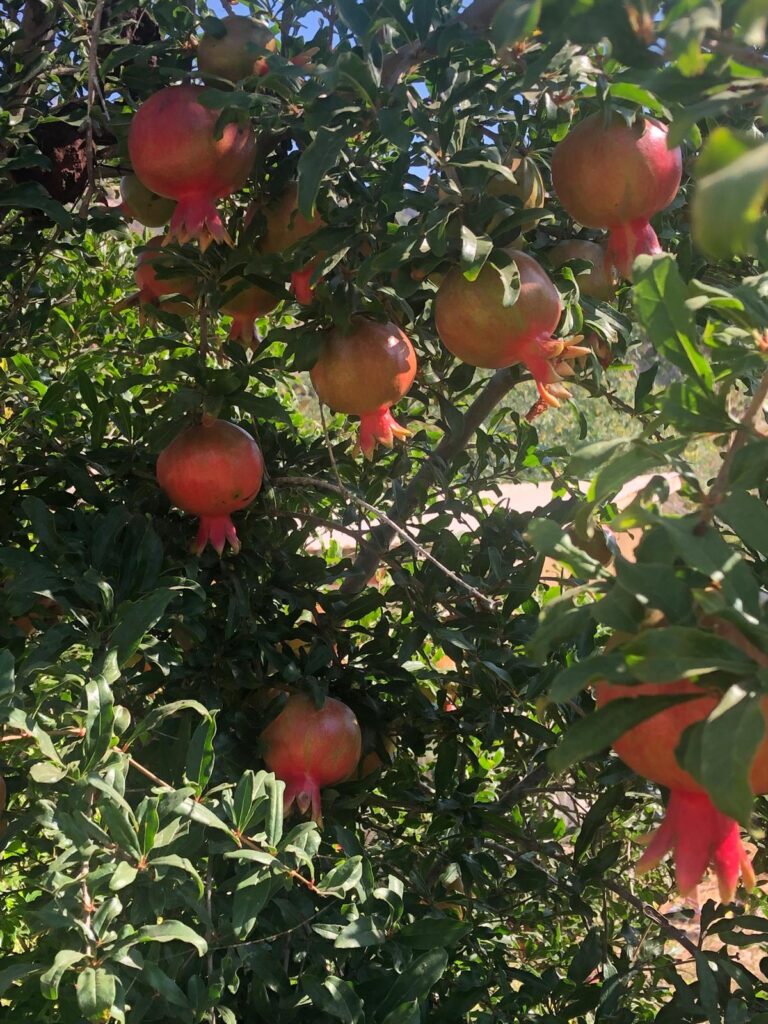
During the summer vacation. When summer is still at its peak, the mind is full of children, work, travels, and plans, the Jewish calendar begins to change its tune. In Sephardic and Middle Eastern communities, they begin saying Selichot from Rosh Chodesh Elul. In the synagogues, the shofar begins to be heard. The first pomegranates ripen. In the Israeli sphere of recent years, even many who did not grow up saying Selichot go out at night to encounter the words and the atmosphere. And amidst the race, sometimes we hardly notice: the year is ending. Precisely because of this, it is fascinating to discover how Jewish women in various communities did not wait for Rosh Hashanah or Yom Kippur. They began preparing the way to them weeks in advance. Not through lists and tasks. Through a thread, a candle, a garment, a memory, a prayer, a visit to the cemetery, a conversation with the children, and small moments that repeated day after day.
Forty days, how do you turn time into a process?
In Jewish tradition, Rosh Chodesh Elul opens a period of forty days leading up to Yom Kippur,
in memory of the forty days when, according to tradition, Moses went up to Mount Sinai again and at the end of which he came down with the second tablets, on Yom Kippur.
But how did these forty days take a tangible form in the lives of women? In the sources before us, Rosh Chodesh Elul appears not merely as a date on the calendar,
but as a starting point. In various communities, women begin to take action: visiting the cemetery, preparing threads and wicks, mentioning names, saying supplications, preparing clothes, and bringing into the home the feeling that time has changed. They did not just wait for Yom Kippur. They built the path to it.
On Rosh Chodesh Elul: Taking a thread and visiting the cemetery
In Bóbrka in Eastern Galicia, Rosh Chodesh Elul marked a clear beginning. In the community’s memorial book, it is described that on the first day of Elul, women would visit the cemetery, “to the graves of ancestors.” They prayed for their family members, gave charity, and turned to the graves of their parents and relatives. Within the description, two women are even mentioned by name, Chaya Di Kunichs and her daughter Frida. They would walk in the cemetery with a ball of thread in hand and “encircle” the cemetery. From these threads, they would later prepare the wicks for the Yom Kippur candles. This is an almost tangible connection between the generations: the thread passes between the graves of the mothers and fathers, and from it, they spin the wick that will shine on Yom Kippur. Memory turns into light.
In Southern Russia: The work begins in Elul and intensifies
A similar custom was also documented in Southern Russia. From Rosh Chodesh Elul, on Mondays and Thursdays, women went out to the cemetery with cotton threads.
Expert women, called Feldmesterins in Yiddish, encircled the cemetery or the graves with thread. Afterwards, they took the threads home, prepared wicks from them, and dipped them in wax to create candles for Yom Kippur. In the women’s circle, during the work, supplications were said in Yiddish, and family members, mothers, and ancestors were mentioned.
As the High Holy Days approached, the activity intensified. Meaning, Elul was not just a date. It created an ever-increasing pace of preparation.
“Mother’s holy work”
In Sokolivka, the preparation of Yom Kippur candles is described in extraordinary words: “Mother’s holy work.” The mother would measure flax threads over the graves of family members, create wicks from them, and distinguish between two candles:
A “soul candle,” which would be brought to the synagogue, and a “candle of life,” which would be lit at home. And the children? They stood around her and watched. This is how tradition is passed on. Someone doesn’t always stop and say to a child: “Now I will teach you a Jewish custom”.
The children see mother doing. They hear the names she mentions, smell the wax, see the thread in her hands, and learn.
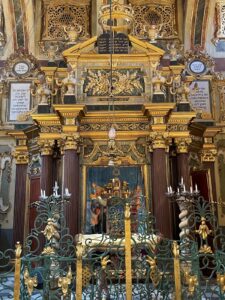
Casale Monferrato Synagogue, 1595 Italy. The candles are the handiwork of the women.
One thread for every name
In Kuty in Galicia, women who truly specialized in preparing the wicks are already described. “Every housewife would prepare two large candles, one for the dead and one for the living.” While intertwining the wick, the expert woman would mention the family members, a name for each thread, alongside prayers and requests. In Tolste, there was an older woman to whom the women came to prepare the wicks. This is not a “technical preparation for a candle”.
It is a craft that allows one to pause, mention names, mourn, request, and arrive at the holy day differently.
In Damascus: The garment was also part of the preparation Among the women of Damascus, Prof. Yosef Yoel Rivlin documented a particularly fascinating custom.
According to him, as told by Mrs. Samcha Maknoy, women used to prepare three new dresses for Yom Kippur: one for Kol Nidrei night, one for the time the Torah scroll is taken out, and one for the Ne’ila prayer. The custom was linked to a strict observance of purity. This is a preparation that requires time: planning, choosing fabric, cutting, and sewing three different dresses for three moments on Yom Kippur means illustrating the spiritual preparation through a physical and material act as well. In Yemen too, Rivlin documents the sewing of new white clothes specifically for Yom Kippur, and not just ordinary “holiday clothes”.
Between the candle of life and the candle of the soul
One of the fascinating things about these customs is that there is no simple separation between the act and the prayer. The women measure threads, wrap and prepare wicks, and within the handiwork itself, a ritual is created. Shalom Yaakov Abramovich, known by the pen name Mendele Mocher Sforim, one of the central creators of Hebrew and Yiddish literature in the 19th century, described in his work “In Those Days” an extraordinary feminine scene. Sarah, a prominent figure in the community, stands solemnly, and the women of the neighborhood surround her. A literal circle of women is formed around her, gathering ahead of Yom Kippur around the act of preparing the wicks. Sarah prepares thick wicks for the Yom Kippur candles: one candle for the synagogue, a “soul candle,” and one candle to light at home, “the candle of life.” Every thread she places receives a name and a memory: Adam and Eve, Noah, Abraham, Sarah, the Patriarchs and the Matriarchs. But the ancient figures do not remain in the past. Sarah ties to them the burning worries of the women living around her:
life and death, the children, the family, the dangers, and the hope to pass safely into the next year. And when she tells of our Mother Sarah, the biblical memory almost immediately turns into the cry of the mothers around her: that they should not become widows, and that their children should not be taken from them. The women burst into tears, and Mendele connects the prayer to the harsh reality of those days, in which Jewish children were taken from their families and handed over to the Czar’s army. Thus the wick becomes more than a thread. It connects our Mother Sarah to the Sarah who leads the ritual, between the ancient mothers and the mothers of the town, between the soul candle in the synagogue and the candle of life at home.
And the circle of women around her becomes a moment of shared prayer, memory, fear, and hope.
“The hands do, the voice prays, and the entire Jewish memory is woven into the light.”
A contemporary proposal inspired by women’s customs:
And what can we take from them for our Elul?
In recent years, candle-making workshops have been flourishing. Pouring wax, choosing a scent, threading a wick, working slowly with the hands. The workshops themselves are presented today as a space for slowing down, creativity, and gathering.
Perhaps that is why the candle is so fitting for our Elul too. It requires time. You cannot rush the wax,
you cannot skip the wick. And while the hands are busy, space opens up for thought, for memory, and for words.
If you wish, you can create two candles inspired by the “candle of life” and the “candle of the soul” described here.
Not as a reconstruction of the ancient custom, but as a contemporary tribute. One candle for who and what we wish to carry into the next year, and one candle for memory, for the generations, and for those who are not with us.
During the creation, you are invited to add ancient words:
“May we be remembered and considered before You… for good and for blessing” – from a supplication at the time of preparing the wicks.
“And give me what I do not know how to ask of You” – from a prayer preserved among the female crypto-Jews of Portugal during the preparation of wicks.
What light do I want to add this year?
Who do I wish to carry with me into the new year?
What name of a woman from my family do I want to mention?
What do I wish to leave behind, and what do I want to continue burning?
And what do I still not know how to ask for?
Candle workshop
You are invited to write the words on a small note, say them out loud, or simply hold them while your hands create.
And perhaps this year we too can choose one sign of our own.
Not to wait for the big day to arrive.
To begin the path to it now.
With hands, with words, and with light.
The “Women’s Prayer” project began two decades ago as a book that documented and collected Jewish women’s prayers throughout history. The book, which became a bestseller, revealed an entire world that had almost disappeared from our sight – a breathing and vibrant Jewish-feminine space that reflects a Jewish life story that was almost never told through conventional historical tools.
Today, marking 20 years since the book’s publication, we are proud to expand the project to a new format of prayer cards, combining the ancient prayers together with images from a stunning Judaica collection (courtesy of the William Gross Collection, photography: Arnon Barmucha).
The cards are intended for daily use, personal contemplation, family ceremonies and community activities – they invite us to return and reconnect with the rich feminine tradition that passed from mother to daughter throughout the generations.
Women’s Prayer Cards (Tefilat Nashim)
We use cookies to ensure the website functions properly and improve user experience. You can choose which types of cookies to enable.
Join us for women's prayer
A connection to the Jewish story through women’s voices Join to receive sources, prayers, rituals and stories from the Jewish female tradition.