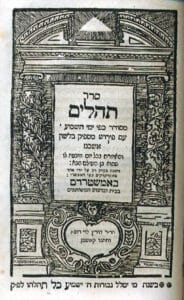
Shir Arbiv’s research takes her on a family journey in search of the life and legacy of her great-great-grandmother, Sharina (Sharina Pardo-Sidi), who lived in Izmir at the end of the nineteenth and the beginning
of the twentieth century.
Sharina, an educated and thoughtful woman, was the last in her family’s line of women who carried daily prayer on their lips. “In her hands remained an ancient Book of Psalms and a copy of Shevet Musar printed in Izmir in 1888,” Shir writes, “books that were passed down as heirlooms and became symbols of a broken chain of feminine spirituality in my family.”
“She was the last woman in our family line who prayed every day.
Always holding a small Book of Psalms, always dressed in black, always praying.”
Interview with her granddaughter, Laila Huli
Sharina lived within a vibrant Sephardi Jewish community. Her home was a center of distinct women’s customs and rituals: marking Rosh Chodesh as a women’s holiday, keeping the Four Species after Sukkot and placing them in a beautiful vase, amulets against the evil eye, and a red birth-cloth to protect mothers and infants from Lilith.
The house was also a hub of Hebrew and liturgical culture. Sharina taught the girls of the family to recite Shema and Psalms, and every Shabbat she would read aloud from the ancient Psalms book that is preserved to this day.
.