Share:

Facebook
LinkedIn
WhatsApp

Grace Aguilar:
The Most Prolific Jewish Woman Writer of the Nineteenth Century

By Maya Spielman

“The Torah was not written solely for its learned commentators, but for every human being.”
from the introduction to The Women of Israel (1845)

Grace Aguilar (1816–1847) was a British Jewish author, poet, biblical commentator, and theologian of Sephardi-Portuguese descent. Though her life ended at the young age of 31, she left a remarkably rich legacy that became a foundation for modern Jewish women’s thought. It is known that she published about twelve major works, many of which were translated and widely circulated around the world.

Aguilar was born into a family descended from Portuguese conversos. Her parents had fled Portugal despite the dangers of the Inquisition, which continued there until 1821. The family carried with them a deep memory of hidden Judaism, persecution, and the struggle to preserve identity. This traumatic background, combined with the Victorian environment of London, shaped Aguilar’s thought and inspired her lifelong focus on courage,
faith, and Jewish women’s renewal.

Aguilar developed an extraordinary love for the Bible. This connection stemmed largely from her mother, Sarah Aguilar, who read Scripture with her regularly and in great depth. These readings left a strong imprint on her mind and became the seed of her interpretive method.

For Aguilar, the Bible was not only a legal text. She saw it as profound poetry, a landscape of human emotion and spiritual longing. This approach allowed her to uncover the feminine journey within the ancient stories, turning Scripture into a “book of life” for every woman.

Her writings call upon women to recognize their inner strength and to take pride in their identity. Aguilar argued that many limitations placed on women throughout Jewish history, including restrictions shaped by the Talmudic era, were the result of a people preoccupied with survival, persecution, and exile.

But in nineteenth-century London, she wrote, a woman “sitting in a beautiful dress” and free to practice her faith openly could now learn, influence, and reclaim her place. Women, she insisted, must step beyond the old social categories of “slave, minor, and fool” and return to their rightful spiritual and communal standing.


.
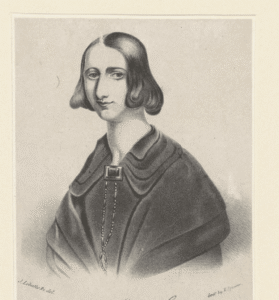
Grace Aguilar

Foundational Works

The Women of Israel (1845)

Her greatest and most ambitious project.
In the introduction she writes, “The Torah was not written solely for its learned commentators but for every human being.”
With this, Aguilar opened the door to a personal and feminine reading of Scripture.

The book is a theological exploration of biblical women, written as a kind of biography of the Jewish woman across generations. Aguilar presents the matriarchs as full partners in shaping the Hebrew nation. She freely delves into the unspoken emotions behind the biblical narratives.

She organizes the book by historical periods:

  1. The Matriarchs
    Sarah, Rebecca, Leah, Rachel, and Eve
  2. Women in Egyptian Bondage and the Wilderness
    Yocheved, Miriam, and the daughters of Zelophehad
  3. Women from the Era of the Judges
    Deborah, the wife of Manoah, Naomi, and Hannah
  4. Women in the United and Divided Monarchies
    Michal, Abigail, Abishag the Shunammite, and Huldah
  5. The Babylonian Exile
    Queen Esther
  6. Wars and Dispersion
    The impact of historical upheaval on women’s status
  7. Women of the Present Age
    Shaped by all that came before

Aguilar concludes that the first five periods are guided entirely by the voice of God, revealing the inherent


sanctity of Jewish women’s history. Her goal, she states, is to instill in young Jewish women feelings of patriotism, belonging, and universal love.
There is no better way to understand and love God, she writes, than to present His words and our people’s history simply and directly, for “the laws and rights He granted His people have existed from time immemorial.”

The Spirit of Judaism

A theological work defending Judaism against missionary claims, emphasizing morality, spiritual depth, and faith.

The Vale of Cedars

A historical novel set in Spain during the persecutions of Ferdinand and Isabella. At its center stands a Jewish heroine torn between religious loyalty and forbidden love for a Christian nobleman. The novel provided nineteenth-century Jewish girls with a courageous model of faithfulness, identity, and inner strength.

Aguilar as Interpreter of the Female Journey

Three examples of feminine messages in Aguilar’s work:

Eve: For Aguilar, Eve represents divine compassion granted to women from the very beginning. She emphasizes that grief of the magnitude Eve endured could paralyze any mother:
the murder of Abel, the exile of Cain, and the shattering loss of both sons in one day.
Yet the world continued, and Eve eventually gave birth again.
Aguilar highlights the time a woman needs to recover from trauma and speaks directly to her readers:
“Look to Eve if you have known such sorrow.”

Rebecca: Rebecca is portrayed as a decisive leader, stepping into the unknown to fulfill her purpose. She takes responsibility for preserving the covenant even when it demands painful choices, including preferring one son over another.
Aguilar notes the loneliness that accompanies such decisions, yet reminds women that sometimes, like Rebecca, they must act boldly for the sake of the nation.

The Daughters of Zelophehad: They symbolize women taking initiative, responsibility, and moral action. Aguilar presents them as a model for standing before leaders and demanding justice without tearing apart the social fabric. Women, she teaches, must learn when to fight for their rightful portion, like the daughters of Zelophehad, yet do so in a way that preserves communal unity.

At a time when many women felt spiritually marginalized, Grace Aguilar rose to offer them a new path. She pointed out that although countless instructions had been written for women, there had been no continuous work that allowed Jewish women to see themselves reflected in the stories of the Bible.

She challenged the misconception that the Bible is merely a list of laws. Instead, she restored it as a mirror in which women can recognize their own struggles, hopes, and capacities.

Aguilar’s legacy reminds us that a woman’s strength lies in inner resilience, learning, independent thought, and supportive fellowship. This blend, she writes, nourishes the soul and grounds a woman’s spiritual integrity.

She urged women to turn to the sources God provided, especially the Bible, to cultivate solidarity and compassion in times of hardship.
Through this message, Aguilar gave generations of young Jewish women a sturdy foundation for pride in their identity.

This inner steadfastness, rooted in Aguilar’s teachings, becomes a source of renewal. It is the key to healing the heart, rebuilding the home, strengthening the community, and restoring the people after moments of crisis.

About Us | Women's Prayer Project

The “Women’s Prayer” project began two decades ago as a book that documented and collected Jewish women’s prayers throughout history. The book, which became a bestseller, revealed an entire world that had almost disappeared from our sight – a breathing and vibrant Jewish-feminine space that reflects a Jewish life story that was almost never told through conventional historical tools.

Today, marking 20 years since the book’s publication, we are proud to expand the project to a new format of prayer cards, combining the ancient prayers together with images from a stunning Judaica collection (courtesy of the William Gross Collection, photography: Arnon Barmucha).

The cards are intended for daily use, personal contemplation, family ceremonies and community activities – they invite us to return and reconnect with the rich feminine tradition that passed from mother to daughter throughout the generations.

Our Books

Women’s Prayer Cards (Tefilat Nashim) We use cookies to ensure the website functions properly and improve user experience. You can choose which types of cookies to enable.
Cookie Selection


Join us for women's prayer

A connection to the Jewish story through women’s voices
Join to receive sources, prayers, rituals and stories from the Jewish female tradition.