“Always better. Never worse”

Word of Inspiration

Time and Place

Prayer Content

Rare Judaica Item
Courtesy of the Gross Family

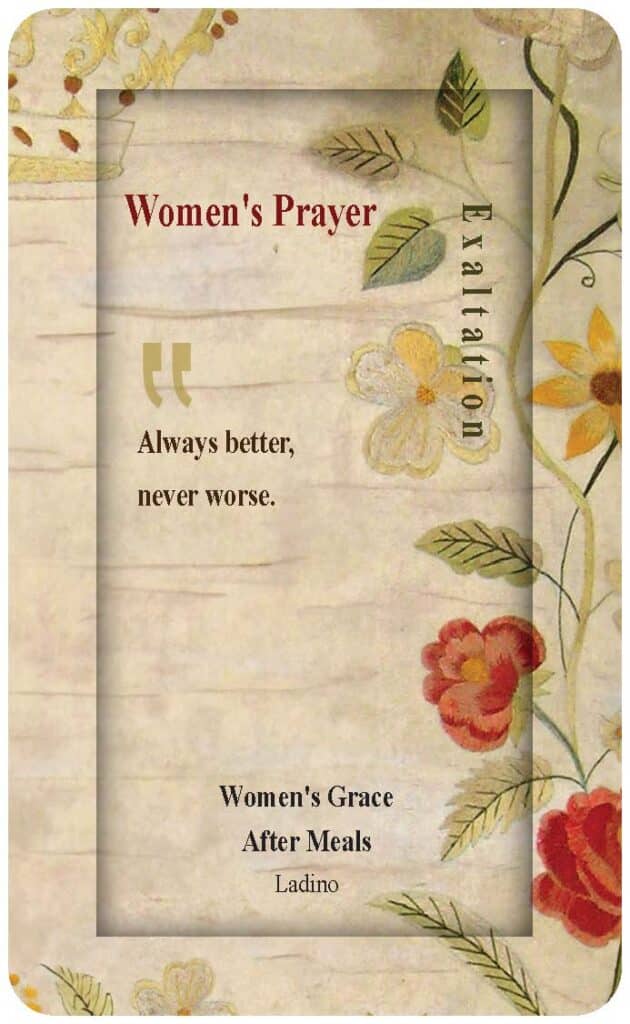
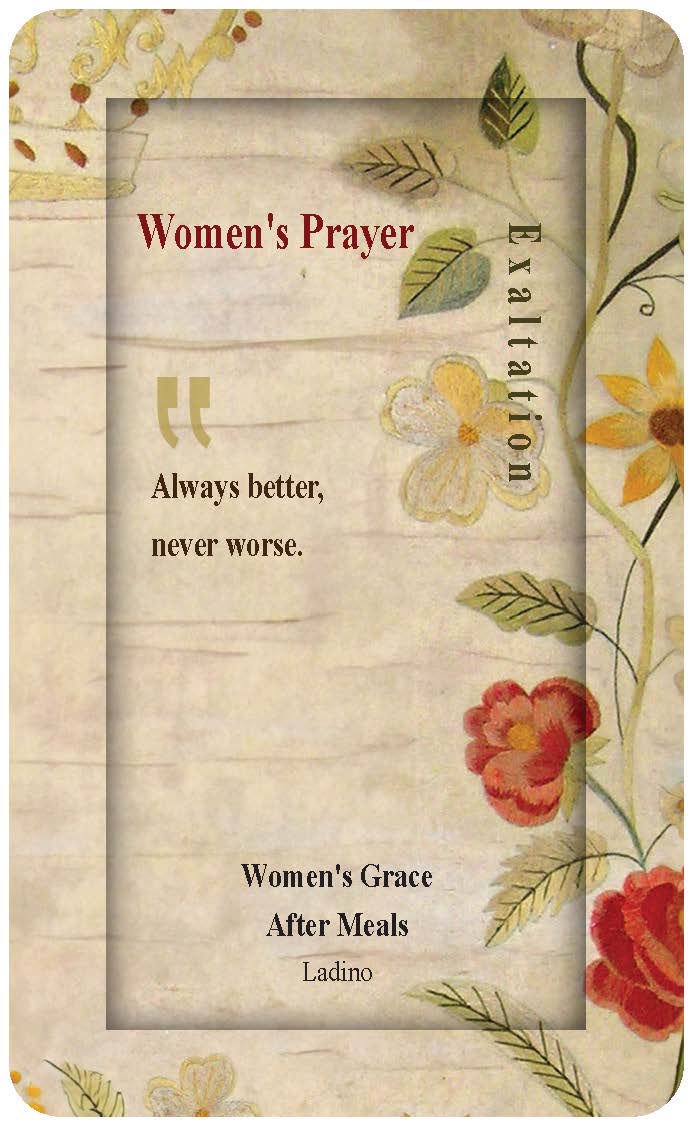
“Always better. Never worse”

Birkat Hamazon in Ladino

Word of inspiration: Exaltation

This short, profound blessing was passed down from Berta Aguado, born in Izmir, Turkey (1927), and is part of the Ladino version of the Birkat Hamazon (Grace After Meals), as recited by Sephardic Jewish women.

Ladino, also known as Judeo-Spanish, was spoken for centuries by descendants of the Spanish expulsion who settled around the Mediterranean basin: Turkey, Greece, Bulgaria, Bosnia, Libya and even North Africa. It blended Hebrew, Spanish and local expressions, carrying with it not just words but a world.

Within this world, women cultivated a culture of prayer and hope: personal prayers, folk-rooted prayers and prayers connected to everyday life. These prayers were recited around the table, at the cradle, in the market, on journeys and at the graves of sages.

The prayer on this card carries a powerful and simple message:

Believe in the good. Not as a wish, but as a daily choice. 

“Always better. Never worse.” This is not just a comforting phrase
but a key to a mindset that looks to the future
with open eyes and refuses to let fear dictate reality.

These words are deeply rooted in the tradition of faith among Eastern Testimony women, who know how to combine practicality with spirit, brokenness with hope. They do not need lofty language, they speak the language of the heart.

Where does this meet me?

This card invites you to listen to the echo of these words and remember that even in times of difficulty, hope is not a luxury. It is a way of life. The Ladino-speaking women teach us that within simple words lives the wisdom of the heart. That a blessing can also be a comfort. That a prayer is not just a request, but a reminder of our inner strength. And the heart, when it speaks, speaks with precision.

“Always better” is not only a hope for the future, but a present choice, to see what is, and to believe that the light is not lost.
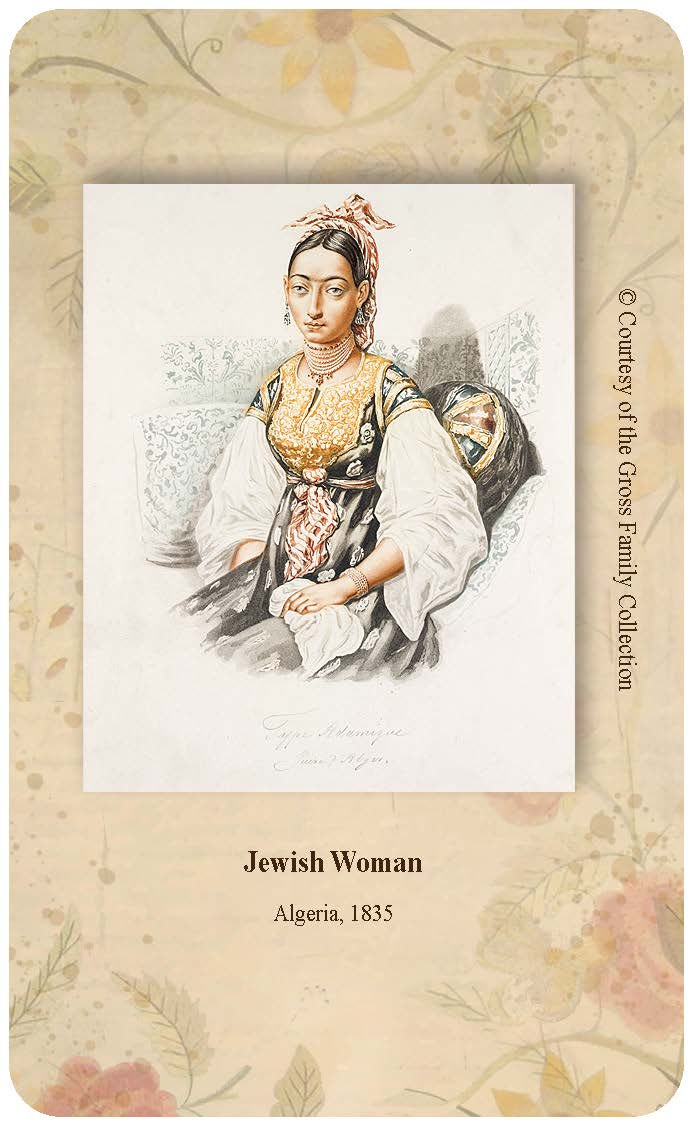
About the Image:

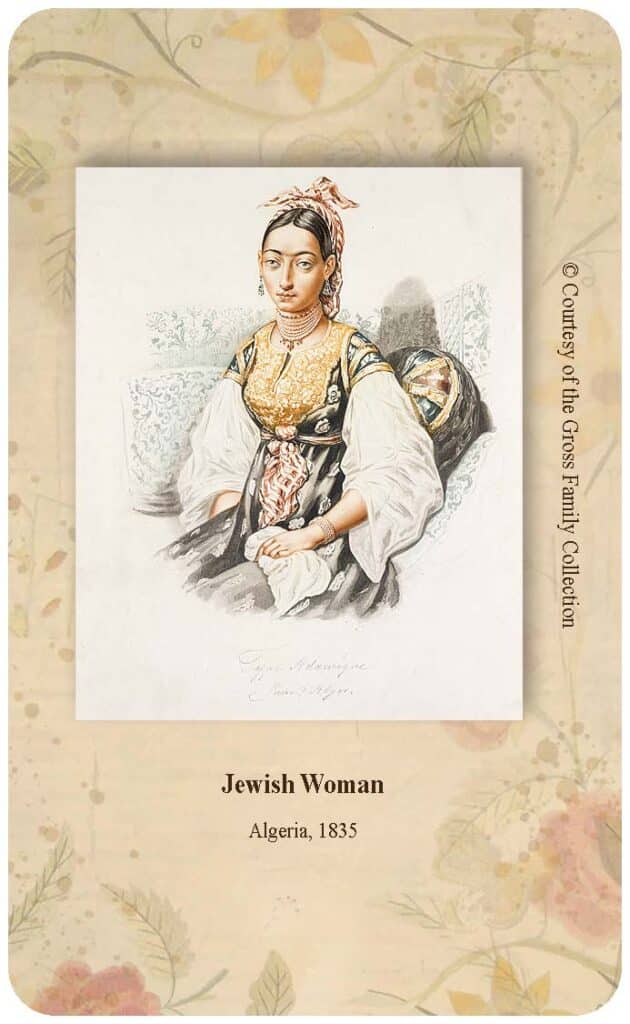
Judaica item: Jewish woman, Algeria 1835

The image was most likely created by a Western artist as part of a documentation expedition in the Ottoman Empire and North Africa. It portrays a Jewish woman from Algeria in the first half of the 19th century.

Her traditional, richly layered garb with embroidered fabrics, jewelry and head coverings reflects not only her social status but also the richly cultured and proud Jewish identity of her community.

Jewish communities in North Africa: in Algiers, Tunis, Fez and Marrakesh, have existed continuously since ancient times and are among the oldest and most deeply rooted in the Jewish world. Over generations, they developed unique traditions, prayers in Judeo-Arabic, folk songs and customs such as lighting candles, hilulot and prayers at the graves of the righteous, passed from generation to generation.

In the early 19th century, and especially after the French conquest of Algiers in 1830, European cultural influence began to grow. It brought both Western visual documentation (like the image before us) and changes to ways of life, education and clothing. This documentation, often called “Orientalist,” sought to present “the exotic East” through European eyes.

From our point of view today, it preserves a visual memory of traditional Jewish
dress and, more importantly, of a female presence
often erased from written history.

This portrait invites us to recognize Jewish women of the Maghreb communities: women who led family rituals, ran internal communal economic networks and carried tradition and prayer, even if their names were not recorded.

Inspiration for Using the Card:

The power of Women’s Prayer Cards in exploring identity, belonging and the search for meaning.

Personal Process

Morning or evening exercise: Hold the card in your hand. Read the blessing aloud. Ask yourself: What is a “little better” thing that exists today? Write down one word in response.

Hope Sticker: Take a photo or write down the phrase and place it somewhere visible (on a mirror, fridge or spice rack). Each time you see it — let it be an anchor.

Breathing: Use the card as an anchor for a conscious breathing exercise:
Inhale — “Always better”, Exhale — “Never worse”

Discussion Circle

Suggested circle question: What is the “small blessing” accompanying you these days?

Another suggestion: Find a small item in your personal bag that symbolizes strength or quiet hope for you and place it in the center of the circle. Each person chooses an item that is not theirs and shares how it strengthens or inspires hope.

Writing and sharing suggestion: Read the card aloud together and invite participants to write a personal line of hope inspired by it.

Emotional and Therapeutic Work

Anchor card for working with hopelessness or despair: Use the card when facing prolonged difficulty or a sense of darkness. It does not deny the pain, it opens a crack through which breath can enter.

Working with inner conflict: Place the card before a dilemma.

What are the points that still help you believe things can get better?

What is the “blessing” at the heart of the wound?

Use with those facing loss or separation:

Write letters to the future, letting hope lead the final line.

The card can also serve as a visual reminder in a memory or healing box.


To Deepen In A Jewish Woman’s Prayer Book, you can find additional prayers in Ladino, Yiddish and Judeo-Arabic testimony to women’s Jewish lives rich in spirit, faith and language.


“Ring the bells that still can ring
Forget your perfect offering
There is a crack, a crack in everything
That’s how the light gets in”

Leonard Cohen

Between Words and the Wisdom of the Heart

Iris Haim, a bereaved mother and spiritual woman whose son Yotam, may be of blessed memory, was killed in a tragic friendly fire incident during his military service, shares:

“My son was killed by IDF forces, true. But he died a hero in the course of war. I don’t ignore the circumstances. I have choice and free will in how I shape my consciousness. I much prefer the mindset of a hero. It strengthens me and gives me courage”.

Her words echo the spirit of the phrase.

A daily choice of faith, light and the power of words to sustain life.

Click me

Women’s Prayer Cards (Tefilat Nashim) We use cookies to ensure the website functions properly and improve user experience. You can choose which types of cookies to enable.
Cookie Selection


Join us for women's prayer

A connection to the Jewish story through women’s voices
Join to receive sources, prayers, rituals and stories from the Jewish female tradition.