Share:

Facebook
LinkedIn
WhatsApp

The Women of Greece:
When Memory is Preserved in the Home

Prayers, blessings, songs, customs, and memories were passed down for generations from hand to hand, from mother to daughter, from grandmother to granddaughter. A journey to Athens brought me back to a question that has accompanied me for years: what remains of the rich feminine world of Greek Jewry, and what else can be gathered before it is too late?

“Why do you have almost no prayers and customs of the women of Greece?”

I have been asked this question for years. And the truth is, I ask it too. On the long journey of Women’s Prayer, in the search for prayers, customs, blessings, and life stories of Jewish women from communities around the world, very little reached me from Greece. One of the special items I encountered was the blessing for the bride and groom of the Jews of Corfu.
But it was hard for me to believe that this was all.

Greek Jewry was an ancient and rich mosaic of diverse communities.
Romaniote communities, among the oldest in the Jewish world, existed in Greece for many generations and developed their own versions of prayer, liturgical poems, language, and customs.
Alongside them, following the expulsion from Spain, grew large Sephardic communities where Ladino was the language of the home and culture, led by Salonika, one of the most important Jewish centers in the world. From Ioannina and Salonika to Corfu, Athens, Chalkis, Volos, Trikala, Rhodes, and other communities, there existed different local traditions, different languages, different customs, and different ways to live Jewish lives.

And as one is exposed to this wealth, the question sharpens: Where are the voices of the women? What did they sing to the children? What did they whisper to the bride before the Chuppah? How did they bless a new mother? What prayers did they say in times of illness, fear, or longing? What did they prepare for the holiday? What did they embroider? What stories did they tell? And what customs took place specifically in the home and never made it into the Siddur, the community register, or the history books?

Here, in my eyes, lies a treasure that can still be saved. For a large part of the feminine memory was not preserved in the official archive. It was passed down within the family: in a melody, in a sentence in Ladino or Greek, in a grandmother’s blessing, in a recipe, in a photograph, in an object, in a story, or in a custom whose origin no one remembers how to explain anymore.

And when an entire world was almost destroyed, every such detail is not merely a family memory. It is a part of the missing mosaic of Greek Jewry.

And then I was invited to Athens.
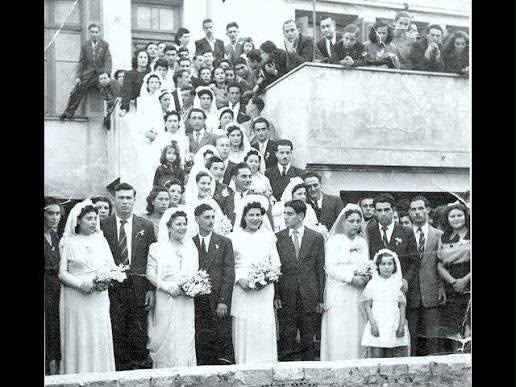
From the destruction, choosing life: A Jewish wedding in Salonika, 1946

Since this page is still under construction and growing right now, we would love to hear from you too! You are invited to share with us the customs, memories, and prayers passed down in your family, and take part in creating this touching, feminine mosaic.
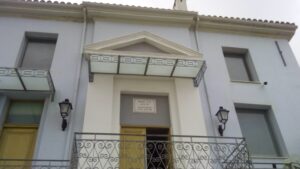
Gathering Testimonies in Greece

Through the initiative of the Israeli Embassy in Greece, the opportunity opened before me not merely to lecture to the community, but to meet up close the people and places where the Jewish memory of Greece is being gathered, researched, and preserved.
At the exhibition “Like Hunted Birds: Greek Jews after World War II”, in the ancient bathhouse in Athens, I met the curator and historian Eleni Beze, and later, researchers and women of culture engaged with the Jewish memory of Greece, among them Eleni Kouki, Odette Varon-Vassard, and Zanet Battinou, director of the Jewish Museum of Greece. Among documents, objects, and testimonies, homes, families, and lives that were cut short rose up once again.
But alongside the story of destruction, another story opened before me: the story of continuity. What managed to pass onward? Who preserved? Who told? And who still remembers? I encountered Ladino traditions, memories from Salonika, and testimonies from the ancient Romaniote world, and once again it became clear just how much of Jewish culture existed specifically within the home: around the holiday table, in the kitchen, in the garments, in the songs, in the blessings, in the embroideries, and in the ceremonies of life. And within this space, women held a central role.

Buena Sarfatty Garfinkle (1916-1997): When Memory Turns into Words

One of the voices I brought with me to the lecture in Athens was the voice of Buena Sarfatty from Salonika. Sarfatty was a partisan, a Ladino poet, and a Holocaust survivor, who documented in hundreds of coplas (traditional folk poetry in Ladino used for historical and communal documentation) not only the tragedy, the destruction, and the experiences of the war, but also the life that preceded them: the family life, the street, the weddings, the holidays, the foods, and the voices of Jewish Salonika.

She reminds us that memory is not composed merely of dates and official documents. Sometimes the most important knowledge about a community is preserved in a song a woman remembered, in the words with which she blessed her children, in a recipe she prepared, or in a family custom that no one thought to document. Thus, for example, she described the simplicity of life: “On Shavuot we sit under the tree with the wife and children, bringing full baskets…”, and alongside this, she expressed the deep fracture: “In war, no one wins. Only the mothers cry.”

Precisely for this reason, her writing is so precious. Through her poems, she preserved the voices of everyday life itself, and what seemed for years to be merely “everyday life”, is revealed today as a complete archive.

What have we received, and what do we choose to pass on?

The “Etz Chaim” Synagogue in Athens

In the evening, at the Etz Chaim Synagogue in Athens, I met with the sons and daughters of the community. We spoke about memory, identity, and continuity, and returned to the question that has accompanied Women’s Prayer from the very beginning: What have we received from the generations before us, and what do we choose to pass on?

In Greece, this question is especially urgent. The Holocaust did not only cut short human lives. It also severed chains of transmission: women who did not have the chance to teach their daughters, grandmothers who did not merit to tell their granddaughters, songs that were not recorded, blessings that were not written, and customs that disappeared along with the homes in which they took place.

But not all is lost. Part of the memory is still with us. In a drawer. In an old notebook.
In a photograph. In a recording. In a sentence in Ladino that grandmother used to say.
In a family recipe. In a blessing said before a wedding. In a story passed down in the family without anyone stopping to write it down yet. There are still women and men who heard the previous generation. There are families carrying memories without knowing how rare they are. There are words that can still be recorded, translated, documented, and returned to the shared Jewish story. Therefore, the visit to Athens is not the end of a journey for me, but a beginning.

I seek to expand within Women’s Prayer the gathering of voices of the women of Greek Jewry, from the Romaniote tradition and from the Sephardic-Ladino tradition, from the large communities and from the small communities. If a prayer, a blessing, a custom, a song, a ceremony, a story, a photograph, a recording, or a memory of a woman from Greek Jewry has been preserved in your family, we ask to hear from you. From Salonika, Ioannina, Corfu, Athens, Chalkis, Rhodes, Volos, Trikala, or any other community. Even if it seems to you that it is “just something grandmother used to do”. That is exactly what we are looking for.

Write to us and send the testimony, the story, or the object that has been preserved with you. Sometimes a single memory preserved in the home completes a missing piece in the story of us all.

My gratitude to the Israeli Embassy in Athens, which initiated the visit and made the encounters possible, to the Jewish community in Athens, to the Jewish Museum of Greece, to the researchers, and to everyone who opened a door, an archive, and a memory before me.

The journey to gather the voices of the women of Greece is only just beginning.

About Us | Women's Prayer Project

The “Women’s Prayer” project began two decades ago as a book that documented and collected Jewish women’s prayers throughout history. The book, which became a bestseller, revealed an entire world that had almost disappeared from our sight – a breathing and vibrant Jewish-feminine space that reflects a Jewish life story that was almost never told through conventional historical tools.

Today, marking 20 years since the book’s publication, we are proud to expand the project to a new format of prayer cards, combining the ancient prayers together with images from a stunning Judaica collection (courtesy of the William Gross Collection, photography: Arnon Barmucha).

The cards are intended for daily use, personal contemplation, family ceremonies and community activities – they invite us to return and reconnect with the rich feminine tradition that passed from mother to daughter throughout the generations.

Our Books

Women’s Prayer Cards (Tefilat Nashim) We use cookies to ensure the website functions properly and improve user experience. You can choose which types of cookies to enable.
Cookie Selection


Join us for women's prayer

A connection to the Jewish story through women’s voices
Join to receive sources, prayers, rituals and stories from the Jewish female tradition.