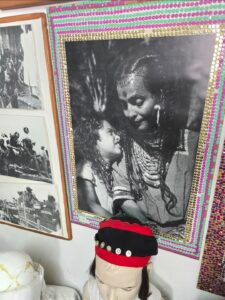
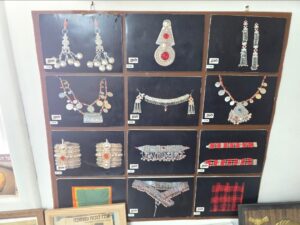
Ofir Aviram set out in pursuit of the women’s singing of the Jews of Habban,
returned to the testimonies and to the bearers of knowledge, and sought to clarify what has been preserved in tradition, what has already been lost, and what can still be documented, rescued, and brought back to life.
There is Jewish knowledge that is not found in books. It lives in memory, in voice, in movement, in custom, and sometimes remains with a handful of women who still remember. If we do not ask now, part of it will simply disappear.
Out of this understanding, a research initiative that is also a rescue project was born in the master’s seminar “Women’s Prayer, Jewish Women Write”: the students go out to search for prayers, customs, songs, testimonies, and life stories of Jewish women, to investigate them with academic tools, and above all to restore them to shared Jewish knowledge.
When Women Sang the Prayer:
One of the moving works born of this initiative is the research of Ofir Aviram. He did not settle for what had already been written, but returned to the testimonies, to the bearers of knowledge, and to the voices that can still be heard. His work opens up an entire world before us: prayer that was not always written in a siddur, authority that did not rest on an official role, and a tradition passed from woman to woman through voice, melody, weeping, and circle.
In the Jewish community of Habban, in the Hadhramaut region in southeastern Yemen,
a rich tradition of women’s singing existed for generations. This community lived at a considerable distance from the familiar centers of Yemenite Jewry, as Habban is located more than 300 km from the city of Sanaa. The great distance and geographical isolation of this region contributed to the development of unique local customs, melodies, dress patterns, and pronunciation. Within this space, women acted as holders of ritual knowledge and sang around central moments in life: birth, work, henna, wedding, parting, and mourning.
Within a society in which written religious knowledge was held mainly by men, women held another kind of knowledge: knowledge learned from hearing, from the body, from participation, and from memory.
The researcher proposes viewing this singing not merely as folklore and not merely as music, but as a space in which prayer, supplication, and communal memory took place.
According to him, through singing the women formulated wishes, blessings, pain, and joy, connected biblical stories with everyday life, and passed knowledge from generation to generation.