Bat Mitzvah:
A ceremony of voice, belonging and continuity
There is a moment in life when a girl needs not just a party, but words.
Not just an event, but a gateway.
Not just an age marker, but an invitation to enter her Jewish story with her own voice.
The Bat Mitzvah ceremony, as we know it today, sometimes seems to be taken for granted. But it was not always so.
For generations, Jewish rites of passage for girls did not always receive a clear and recognized place like the boys’ Bar Mitzvah ceremonies. And yet, in various communities, women, families and rabbis created moving ways to mark this moment:
A moment when a young girl becomes a young woman, taking on responsibility, identity, memory and belonging.
During my years of research, and especially since the publication of the book Women’s Prayer, I became an address for many inquiries
of mothers, grandmothers, girls and women who seek to know: how can the Bat Mitzvah be marked as a truly meaningful event? How do you create a ceremony that has depth, connection, tradition, joy and a Jewish female voice?
How do you give a girl not just a beautiful evening, but also words that will go with her onward?
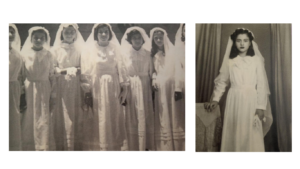
In the book Women’s Custom I also brought a special ceremony from the Italian Jewish community, where the Bat Mitzvah girls would gather on the synagogue bimah, dressed in white, with the Holy Ark open, and say together the Song of Deborah and a special prayer in honor of the occasion.
About a hundred and fifty years ago, in the Italian Jewish community, they began marking the Bat Mitzvah with a unique ceremony for girls.
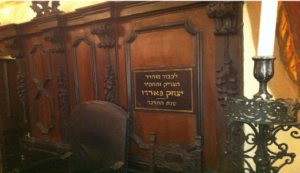
According to the testimony of Yonatan Bassi, his great grandfather, Rabbi Yitzchak Pardo, was the one who first formulated the ceremony while serving as the rabbi of the city of Verona. The ceremony was conducted in the Hebrew language, in a communal, dignified and moving setting.
During it the girls recited the “Shehecheyanu” blessing, a blessing of thanksgiving for great joy and for reaching a new moment in life.
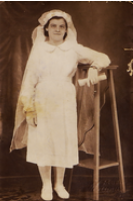
There is something thrilling in these ancient pictures:
Young girls, dressed in white, standing together in the synagogue.
The Holy Ark is open. The community looks at them.
And they make their voices heard.
Not behind the scenes. Not just as spectators. But as part of the covenant, of the Torah, of the memory and of the future.
The choice to specifically say the Song of Deborah is very significant. Deborah the Prophetess is a female leader, a judge, a poet and brave. Her song is a song of thanksgiving, responsibility, leadership and seeing reality with open eyes. When Bat Mitzvah girls say the Song of Deborah, they are not just reading an ancient text,
they join a lineage of women who made a voice heard, led, interpreted reality and knew how to bless it.
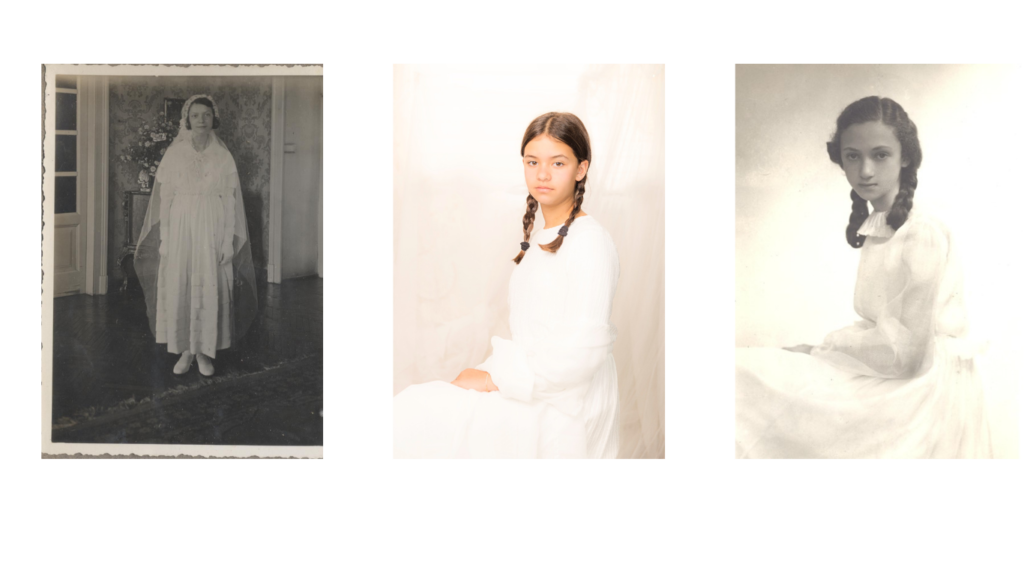
Center: Yonatan’s granddaughter, Gefen, at her Bat Mitzvah in 2022 exactly like Nonna Piera.
Thanks to Yiska Bashi Oppenheim who shared the photo of her daughter.
Left: Clara Artom, Milan.