Baking Traditions That Tell the Story of Shavuot
In Jewish communities, the Shavuot holiday is characterized by a variety of pastries
and cooked dishes that symbolize the holiday and its meanings.
The kitchen’s diverse ingredients serve as educational tools for conveying messages
and preserving tradition.
In Ashkenazi communities, cakes shaped like Mount Sinai called “Sinaikuchen” are baked,
built from seven layers corresponding to the seven heavens of glory.
In some communities, it is even customary to bake long bread, as a symbol that the Torah
is likened to bread and is long.
Sephardic Jewry prepares a seven layer cake called “Siete Cielos”, in memory of the seven heavens Moses passed through upon his ascent heavenward. This cake is decorated with a Star of David and a ladder representing Moses’ ascent to Mount Sinai.
Concurrently, in Italian communities, it is customary to bake challahs in the shape of a ladder.
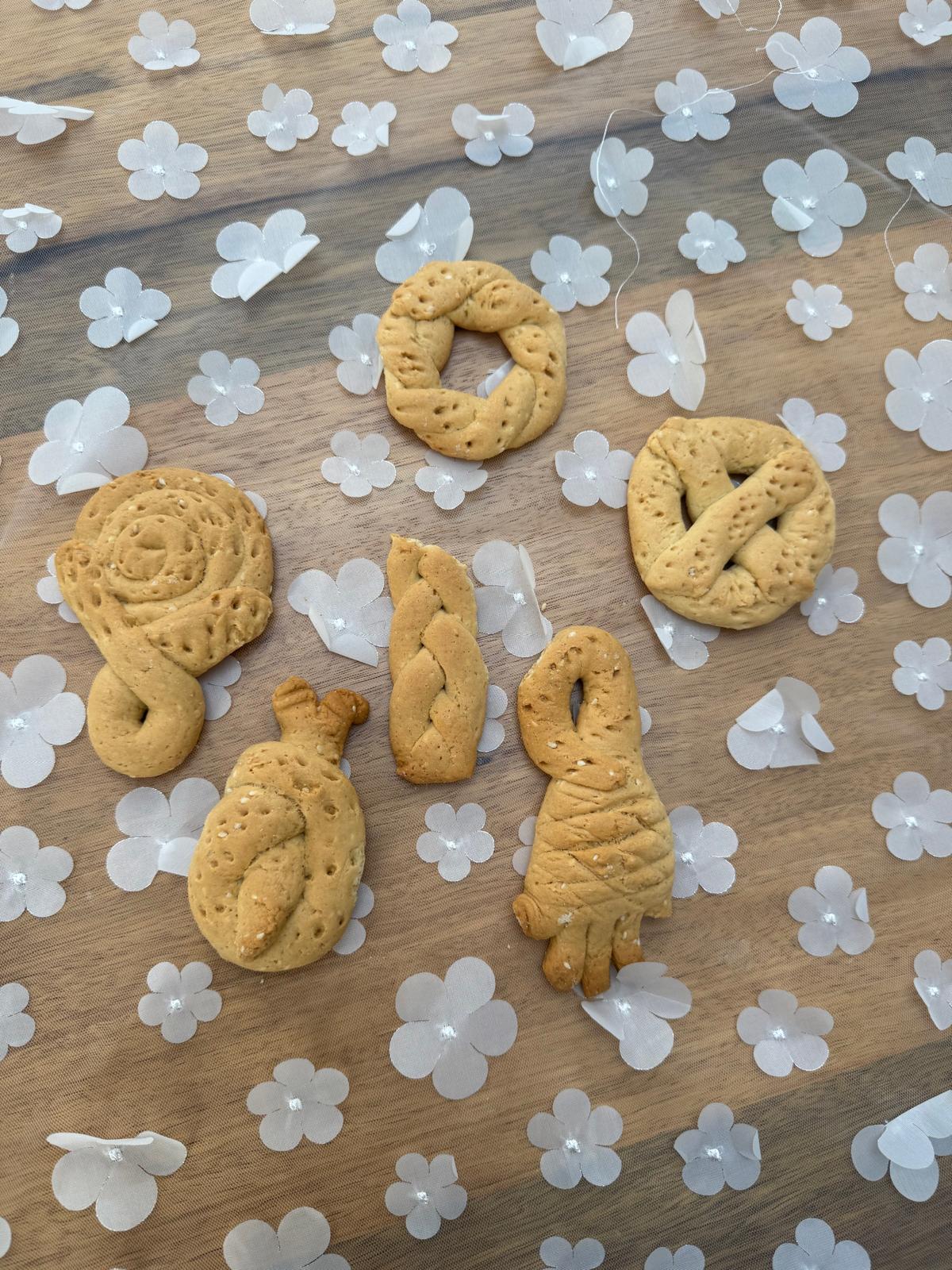
In many homes, wafers and challahs are baked according to the symbols of the holiday. Challahs shaped like a ladder symbolize the ladder Moses climbed on Mount Sinai to receive the Torah. Cakes shaped like a Hamsa represent the verse “I reach out my hand to receive the Torah”. Furthermore, wafers are baked in the shape of the Tablets of the Covenant and a dove (where the dove symbolizes the Assembly of Israel, as it is stated:
“The Assembly of Israel is likened to a dove”), alongside scissors cakes symbolizing the cutting of the parchment on which the Torah is written.