Font "Noa" - Handwriting That Became Living Letters
On this website, we use a special font created from the handwriting of Lookout Noa z”l, who fell on October 7th at the Nahal Oz outpost at age 20.
Noa was full of joy and energy, loved music and dance, and dreamed of traveling the world and making it a better place. Her friends remember her as a source of inspiration who always performed her duties with professionalism and pride. She received her commander’s beret with the dedication: “The light in your heart will overcome any obstacle on the way to your goal.”
The font was created as part of the “Living Letters” project – a moving initiative that transforms the handwriting of fallen soldiers into digital fonts, so their words continue to live and make an impact.
Just as Noa dreamed – even after she’s gone, the light in her heart continues to overcome every obstacle and do good in the world.
We are accustomed to learning about Hannah Szenes as a heroine. The paratrooper, the poet, the young woman who went on a mission to occupied Europe and did not return. We know the poems she wrote: “Blessed is the Match” and “My God, My God”. But within her diaries and letters, another Hannah is revealed: a young woman who sought her path, debated, asked, doubted, yearned, asked for forgiveness, and above all, never stopped examining herself. Perhaps it is precisely this Hannah who can accompany us at the beginning of a new year.
Hannah Szenes was born in Budapest in 1921 to a liberal Jewish family integrated into Hungarian society. Her father, Bela Szenes, was a writer, journalist, and playwright, and passed away when she was six years old. Hannah studied at a Calvinist school for girls, participated in Jewish studies and the activities of the Neolog community, and later, against the backdrop of growing antisemitism in Hungary, deepened her Jewish and Zionist identity. In 1939, at the age of eighteen, she immigrated alone to the Land of Israel. She studied at the agricultural school in Nahalal and later joined Kibbutz Sdot Yam. In 1943 she volunteered for the paratroopers’ mission, in March 1944 she parachuted into Yugoslavia, and in June she crossed the border into Hungary, where she was caught. After months of interrogation and torture she was executed in Budapest on November 7, 1944. But woven between the stations of her biography are hundreds of lines she wrote, in which she tries to understand: Who does she want to be?
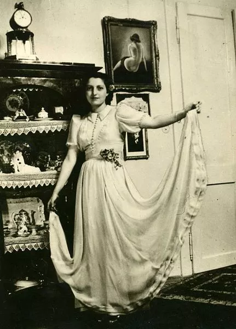
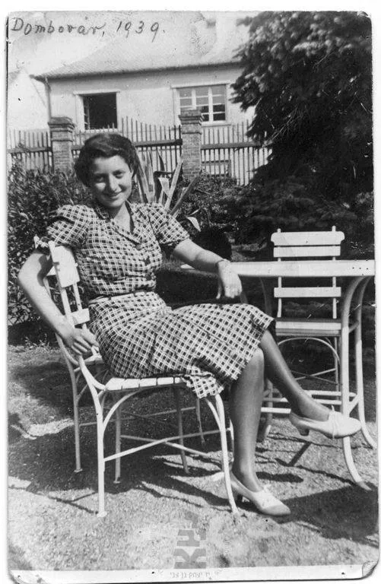
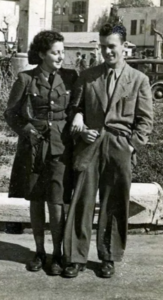
,Hannah Szenes, 1938 courtesy of the Hannah Szenes House,Hannah Szenes, 1939 courtesy of the Hannah Szenes House
Returning to Judaism in Her Own Way
Hannah does not easily fit into the familiar division of “religious” or “secular”.
She did not live within a binding Halachic framework, yet over time, the Jewish language took an increasingly profound place in her life. Following her immigration to the Land of Israel,
she writes with awe about discovering Hebrew literature and shares that she began reading the Bible, which, according to her, she had barely known until then. It is specifically in the Land of Israel that the Bible, Shabbat, Rosh Hashanah, and Yom Kippur transform from a distant heritage into sources through which she examines herself and her life. Already on the first Rosh Hashanah after parting from her home, she writes to her mother in Hungary that the holidays will not be held “in a very festive setting”, but adds that in her soul, she is spending the days of Rosh Hashanah with her. “There is no synagogue here, no Machzor or grand ceremony”,
but there is a Jewish time that brings her back home, to her mother and to herself.
“We will not observe the holidays in a very festive setting, and I fear, Mother, that for you too these days will pass in sadness. With all that my plans and the journey occupy me,
my thoughts still return to you again and again, and in my soul I am spending these days of Rosh Hashanah with you” (Hannah Szenes, letter to her mother, September 13, 1939).
Hannah Szenes, 1941, courtesy of the Hannah Szenes House
To Give an Account to Myself
A year later, on the eve of Yom Kippur 1940, she clarifies for herself the meaning of the day:
“I wish to confess, to give an account to myself, to give an account to God… to compare what should have been with what was”. Hannah engages in a sincere and true spiritual accounting. Not merely a list of blames, but a comparison between the life she lives and the person she aspires to be. She is not satisfied with looking back, but sets a plan for the new year:
to learn, to delve deeper, and mainly “the search for the path: to be a human being”.
This is a kind of personal custom she creates for herself: once a year to stop, to write, to reflect, to decide, and then to go back and check.
“I Will Preserve the Essence of the Day”
In September 1941, on the eve of Rosh Hashanah in Ness Ziona, Hannah formulates an almost unexpected question in her diary: “Do I believe in God? I do not know. My God is very complex…
I believe, despite everything, that the world was created for good, and there is no evil in the world that does not have a glimmer of light, of good, shining through it”.
The doubt does not prevent her from turning to God. Perhaps quite the opposite,
it makes the conversation more honest. God is not a simple answer for her, but an expression of moral forces, of the good she wishes to believe in within a world that is being destroyed.
Shortly after, on the eve of Yom Kippur 1941, she explicitly writes that she will not fast. She does not feel the need to do so, but immediately adds a much more important sentence: “But I will preserve the essence of the day”.
She examines her actions and confesses to apathy, lack of action, words without deeds behind them, wasting time and energy, and a lack of consideration for others.
She does not give up on the tradition just because she does not observe it exactly as she received it. Instead, she asks what is in its heart, and what from it she can take into her life.
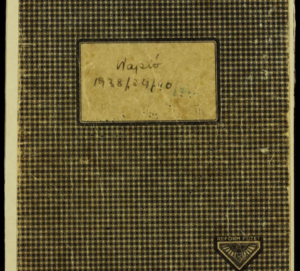
Hannah Szenes’s diary, which she began writing at the age of 13. courtesy of the Hannah Szenes House
“What Do You Receive from Life?”
But Hannah’s soul-searching does not deal only with duty and mission. In May 1943, after years of repeatedly demanding of herself to give, to work, to mobilize, and to influence, she stops and asks:
Hannah Szenes, 1943, courtesy of the Hannah Szenes House
“What do you receive from life? Only that which you give”.
And immediately a very human reservation is heard:
“But that too is not enough…
Not only duties, not only tension and ideology, we need joy”.
And suddenly the heroine is once again a young woman.
She knows that one cannot live solely out of duty; an ideal, too, needs joy, closeness, love, something that replenishes the “inventory” from which we give. Perhaps this is one of the greatest gifts Hannah leaves us: the responsibility to give to the world never cancels our responsibility to ask what gives us the strength to continue.
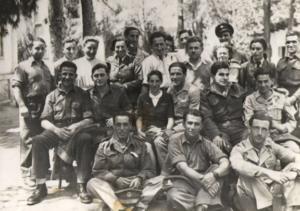
Members of the paratroopers’ mission in Slovakia with the leadership of the Yishuv. courtesy of the Hannah Szenes House
From Words to Life
Time and again, Hannah fears beautiful words that have no action behind them.
In a personal prayer, she asks that the words not be “mere phrases”, but a testament to her life.
And this is the thread that runs between the diary and the choices she made: not settling for asking what is right, but asking what she is willing to do in the wake of the answer.
Her life ended so early, but the questions she left behind do not belong only to national memory. Who do I wish to be? What should have been, and what was? What am I giving? What fulfills me? Which of my words are still waiting to become action?
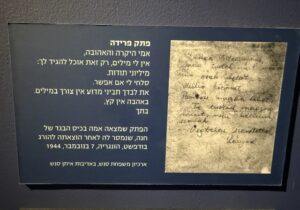
The farewell note, courtesy of the Hannah Szenes House.
In a note found in her clothes after her execution in Budapest on November 7, 1944, at the age of 23,
she wrote to her mother: “My dear and beloved mother,
I have no words, I can only tell you this: Millions of thanks.
Forgive me if possible… With endless love, Your daughter”.
Approaching Rosh Hashanah or Yom Kippur, we can open a notebook and write ourselves four questions, in the spirit of Hannah:
What did I wish to be this year, and what actually happened?
For what do I ask forgiveness?
From Hannah in Shiloh, through Hannah Szenes and down to me, what thread of choice, courage, and mission do I recognize?
What line do I want to draw for myself for the coming year, and where do I wish for it to lead me?
What do I wish to give in the coming year? And what do I need to receive, so that I will have the joy and strength to give?
Keep the file of answers and return to it in a year. Perhaps that is the whole story of Teshuvah (repentance): not to be a different person, but to come just a little bit closer to the person we wished to be.
The “Women’s Prayer” project began two decades ago as a book that documented and collected Jewish women’s prayers throughout history. The book, which became a bestseller, revealed an entire world that had almost disappeared from our sight – a breathing and vibrant Jewish-feminine space that reflects a Jewish life story that was almost never told through conventional historical tools.
Today, marking 20 years since the book’s publication, we are proud to expand the project to a new format of prayer cards, combining the ancient prayers together with images from a stunning Judaica collection (courtesy of the William Gross Collection, photography: Arnon Barmucha).
The cards are intended for daily use, personal contemplation, family ceremonies and community activities – they invite us to return and reconnect with the rich feminine tradition that passed from mother to daughter throughout the generations.
Women’s Prayer Cards (Tefilat Nashim)
We use cookies to ensure the website functions properly and improve user experience. You can choose which types of cookies to enable.
Join us for women's prayer
A connection to the Jewish story through women’s voices Join to receive sources, prayers, rituals and stories from the Jewish female tradition.