Share:

Facebook
LinkedIn
WhatsApp

My Grandmother, Hannah Mashicah , may she be of blessed memory


My grandmother, Hannah Mashicah of blessed memory, the role model of my life to whom
I dedicated my book A Jewish Woman’s Prayer Book, was born in Balkh, Afghanistan in 1900. Her father was one of the leaders of the community, and she grew up in a home where the longing for Zion and the yearning
for Jerusalem were an inseparable part of life. In the early 1920s her family immigrated
to the Land of Israel and settled in the Bukharan neighborhood of Jerusalem, a rich community
center of tradition, prayer and faith. Her presence was a pillar of light in my life.
In her simple and wise words she would repeat: “We must learn to live together.”
She educated us to have patience, acceptance and sensitivity towards others, even when she did not agree
with their opinions or their way of life. In her daily prayer she gave thanks for the privilege
of living in our own state, and for the fulfillment of the dream of a people returning home after
two thousand years of exile.
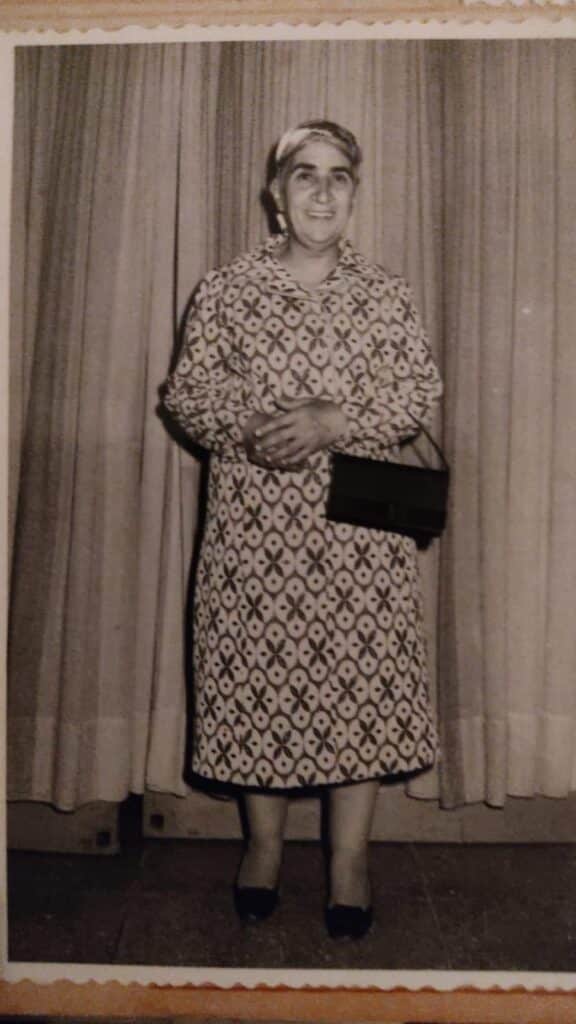


סבתי חנה משיח ז"ל

My grandmother Hanna Moshiach

The High Holidays: Lulav, Sukkah and Prayer

The festival of Sukkot was the festival of her life. All her granddaughters remember her taking the Four Species with calm and devotion, blessing and waving toward the four sides of the sukkah. Her sukkah was a work of art: fabrics adorned and sewn by her own hands, a feminine, domestic creation full of intention.

women are exempt from these commandments, my grandmother was strict about observing them, like many women in Jerusalem of the Yishuv period. In her deeds she expressed the yearning of women to be an inseparable part of the service of the Creator, and even to claim for themselves the right to bless over commandments from which they are exempt.

This tradition is not unique to her alone. Many historical sources teach about women who sought to take initiative and join in prayer and in the commandments “that are time-bound.” From ancient echoes in Ashkenaz, through customs in Dutch communities, and to testimonies from Jerusalem before the establishment of the state, women found their own ways to participate, to bless and to create.

She was born in Balkh, Afghanistan in 1900, and made Aliyah with her family to Jerusalem in the early 1920s. In the Bukharan neighborhood she received guests and children with patience, warmth and sensitivity, and would always repeat: “We must learn to live together.”

In the following video, the figure who inspires my life is seen lighting Shabbat candles and blessing. A small moment, which is an entire world of faith,
hope and intergenerational connection.

Inspiration for the Journey
of “A Jewish Woman’s Prayer Book”

I dedicated my book A Jewish Woman’s Prayer Book to my grandmother Hannah, whom I had the privilege to ask little yet to feel much. Her figure was an inspiration for me for a lifelong journey after the voices of women who prayed, initiated and composed prayers for their generations.

The book, which reveals for the first time a wide collection of women’s prayers from all eras and from all the Diaspora, was born out of an inner knowledge that my grandmother always echoed in me:
without women’s Torah, without their spiritual world,
it is impossible to fully understand the chain of Jewish identity.

A Connecting Figure, A Living Heritage

My grandmother is a symbol of simple faith, rootedness and intergenerational connection. She taught me that the feminine tradition is an essential part of the Jewish space. Without it, identity is lacking. Thanks to her I learned to listen, to cherish and to reconnect the feminine threads that had been forgotten.

About Us | Women's Prayer Project

The “Women’s Prayer” project began two decades ago as a book that documented and collected Jewish women’s prayers throughout history. The book, which became a bestseller, revealed an entire world that had almost disappeared from our sight – a breathing and vibrant Jewish-feminine space that reflects a Jewish life story that was almost never told through conventional historical tools.

Today, marking 20 years since the book’s publication, we are proud to expand the project to a new format of prayer cards, combining the ancient prayers together with images from a stunning Judaica collection (courtesy of the William Gross Collection, photography: Arnon Barmucha).

The cards are intended for daily use, personal contemplation, family ceremonies and community activities – they invite us to return and reconnect with the rich feminine tradition that passed from mother to daughter throughout the generations.

Our Books

Women’s Prayer Cards (Tefilat Nashim) We use cookies to ensure the website functions properly and improve user experience. You can choose which types of cookies to enable.
Cookie Selection


Join us for women's prayer

A connection to the Jewish story through women’s voices
Join to receive sources, prayers, rituals and stories from the Jewish female tradition.