Share:

Facebook
LinkedIn
WhatsApp

Deborah Romm:
The Woman Who Shaped the Jewish Bookshelf

The Widow Romm Is Born

Novogrudok [Northern Belarus], December 3, 1831. The evening shadows fell over the ruins
of the ancient fortress wall and only the echoes of the battle between the Polish rebels and the soldiers of the Russian army disturbed the tranquility of the descending evening.

In the home of the Harkavy family in the center of the town cries of ‘Mazel Tov’ were heard.
A baby girl was born, and her name in Israel was Devora. Already from her childhood,
which passed pleasantly “among fields of gold, on the banks of a pure stream… where a sound falls in the heights during early spring, with the song of the swallow hidden in the depths of the sky,”
as the Polish poet Adam Mickiewicz, a native of Novogrudok, described the town’s landscape, Devora was surrounded by books. Tsarna Ita, Devora’s mother, a daughter of the renowned Strashun family, was ‘learned and educated and wonderfully wise’, and according to the testimony of her granddaughter she ‘subscribed to a German journal and told me the plots of Shakespearean tragedies’. Her father, among the first Jewish enlightened thinkers in this region, was described as ‘a swift writer in our holy language and a true lover of the literature of Israel’. On the shelves of the bookcase in the Harkavy home one could find, alongside volumes of the Babylonian Talmud and halachic books, a wide variety of Enlightenment literature, the best of world literature and popular science books. And as was customary in families that belonged to the circles of the Jewish Enlightenment Devora and her sisters were educated in light of the values of this worldview. As a result Devora mastered a variety of languages
[Polish, German, Russian and Hebrew], which allowed her to expand the horizon of her gaze to broad and diverse cultural realms.

And so it was regarding her marriage. Young Jewish women who belonged to Enlightenment circles perceived the institution of marriage as a space that offers not only a shared roof and economic security but also an ideological and cultural partnership between the couple, even if this meant marriage at an older age than was acceptable in Jewish society. And Devora, like her sisters, waited patiently until she found a partner who would share her worldview.
This is the reason why only upon turning twenty did she marry David, a member of the Romm family, owner of the famous printing press that operated in Vilna, the capital of scholarship and the cradle of Jewish Enlightenment in Eastern Europe.

However, nine years later David passed away, and the printing press was left without a manager. In the absence of a family member capable of continuing the family management tradition of the printing press she took advantage of the opportunity that came her way and in an exceptional step in the social reality of the time took it upon herself to fill her partner’s place. This move, which testifies to both her ambitions and her unique character, provided her with the opportunity to spread her wings. And she indeed soared high. Within a short period of time she positioned herself as the sole manager of the printing press, which from then on was called ‘The Press of the Widow and Brothers Romm’, purchased modern printing machines, implemented strict planning, production and quality control processes, and deployed a wide network of sales agents in Europe and even overseas.

During the years she managed the printing press, until her death in 1903, her press, which became the largest of its kind in the entire Jewish world, published over two thousand titles, including the Vilna Shas which is considered to this day as the most accurate and widely studied edition in the Jewish world.
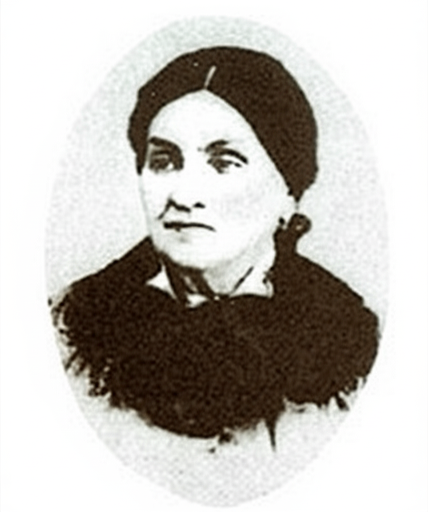
Deborah Romm

A New Voice in the Printing House

Deborah Romm left no written testimony regarding the vision that guided her at the outset of her career as director. However, an examination of the lists of books she published reveals both her cultural worldview and her bold attempt to influence the character of contemporary Jewish society across its diverse segments.
First and foremost, she turned her attention toward social groups that lacked formal education, among whom were many girls and women. Deborah was keenly aware that many Jewish women had not mastered Hebrew, meaning that most Hebrew-language works produced by the Romm press such as prayer books, Pentateuchs, and volumes of ethics (musar) and Jewish law (halakha) remained a closed book to them. She therefore began publishing editions of various works accompanied by translations “in the Ashkenazi tongue customary in our country, known as Ivri-Teitsch, for the edification of the masses and the women among our people.” At times, this feature was explicitly noted in Yiddish on the title pages of daily and holiday prayer books (siddurim and machzorim) published by the Romm printing house. In addition, the press printed and distributed tens of thousands of copies of tkhines (devotional supplications) in Yiddish, intended primarily for women.
Yet she did not stop there; she also enriched the cultural lives of these women with a wide selection of Yiddish books and chapbooks authored by popular writers such as Nahum Meir Shaikewitz (Shomer), Isaac Joel Linetzky, Isaac Mayer Dick, Sholem Yankev Abramovitsh (Mendele Mocher Sforim), Eliakum Zunser, and others.
At the same time, Deborah made a profound contribution to shaping the library of the scholarly and intellectual elite within Jewish society. Taking their place on these shelves were Pentateuchs, Mishnayot, the Babylonian Talmud, the Shulchan Arukh, Ein Yaakov, responsa, and homiletic collections printed in “the printing house of the Widow, which rests neither day nor night… Day and night the house typesets, prints, and disseminates far and wide all the books of Israel that were exiled and wandered with their creators’ knapsacks,” as memorably captured by the poet Zalman Shneur.

Women, Enlightenment, and a New Generation

Nevertheless, although the publication of works belonging to the genre of religious and rabbinic literature formed the economic foundation for the printing house’s existence, Deborah was attuned to the cultural shifts evident in the Jewish street of Eastern Europe as the winds of the Enlightenment penetrated this sphere. She utilized the resource at her disposal—printing and publishing—to broaden the reach of this world of values. Thus, the printing house under her management soon published a wide variety of belles-lettres, poetry, philosophical thought, popular science, folk and modern medicine, history, and travel literature—mostly in Hebrew and Yiddish, alongside works in other languages, primarily Polish.
As part of this endeavor, she published the works of Abraham Mapu, Adam Ha-Cohen, Mikha Yosef Lebensohn, Judah Leib Gordon, Kalman Schulman, Reuven Asher Braudes, Menachem Mendel Dolitzky, Ze’ev Yavetz, and others. These works formed a vital pillar of the “Jewish bookshelf,” to which the writings of the authors and poets of the “Revival Generation” were added years later.
The growing popularity of the Enlightenment within Eastern European Jewish society was reflected, among other things, in the rapid and impressive rise in the number of schools for Jewish girls, as well as in the number of young women who studied in these institutions and acquired reading proficiency in various languages, including Hebrew. In learning the language, the students were aided by Hebrew language and grammar textbooks published by the “Romm Widow and Brothers” printing house.
Consequently, during their schooling and in the years that followed, the cultural world of these women was nurtured both by textbooks and by a wide array of books, periodicals, and newspapers produced by Deborah Romm, who, in her own way, made an invaluable contribution to shaping the cultural identity of the modern Jewish woman.

An Empire of Letters

In the mid 1870s, Deborah initiated one of the most ambitious projects in the history of Jewish publishing – the ‘Kinnus’ (Ingathering) project [which preceded Hayim Nahman Bialik’s ‘Kinnus’ project by many years], as she described in one of her letters: “We wish to publish all the foundational books of the entire Torah. That is, the entire Written Torah, and the foundational books of the Oral Torah. The Written Torah we desire to publish as Mikraot Gedolot, which we have already prepared ourselves to print with many additions, manuscripts of the early commentators. And for the Oral Torah, we shall publish all the books composed by the Tannaim and Amoraim, such as the Babylonian Talmud, the Jerusalem Talmud, and all the Midrashim, both those already printed and those not yet printed. And Sifra, Sifrei, Zohar, etc. Beyond these, we see fit to append to them also Mishnayot with the famous commentaries, and our Ein Yaakov, and perhaps also Rambam and Turim, as well as the four parts of the Shulchan Arukh, so that every one of the subscribers may possess all the foundational books of the religion of Israel.” In the final years of her life, Deborah merited to witness the realization of part of this visionary and comprehensive plan, the fruits of which remain firmly planted in the Jewish bookshelf.
The wide variety of titles published by the Romm press during the years Deborah managed it with a strong hand, which reached every Jewish community wherever it was, not only met the needs of those who belonged to the traditional Jewish literary republic, but also defined new communities of readers.
The writer Alter Kacyzne described this well: “‘The Widow and Brothers Romm’ grew and rose in my consciousness into the image of an ancient Venetian ship cleaving the waves of the sea and sailing across the waters of traditional Jewish culture.” Deborah Romm, who steered this ‘ship’ through the stormy sea of the second half of the nineteenth century, was undoubtedly one of the figures who left a significant and enduring mark on the entire Jewish cultural sphere. The thousands of titles she printed and published nourished the cultural and spiritual world of Jews around the globe and served as conclusive testimony to the place of the female publisher and printer in shaping this world.
Courtesy of: Prof. Mordechai (Motti) Zalkin, historian of Lithuanian Jewry, author of the book: The Widow, Deborah Romm: The Story of a Cultural Agent

About Us | Women's Prayer Project

The “Women’s Prayer” project began two decades ago as a book that documented and collected Jewish women’s prayers throughout history. The book, which became a bestseller, revealed an entire world that had almost disappeared from our sight – a breathing and vibrant Jewish-feminine space that reflects a Jewish life story that was almost never told through conventional historical tools.

Today, marking 20 years since the book’s publication, we are proud to expand the project to a new format of prayer cards, combining the ancient prayers together with images from a stunning Judaica collection (courtesy of the William Gross Collection, photography: Arnon Barmucha).

The cards are intended for daily use, personal contemplation, family ceremonies and community activities – they invite us to return and reconnect with the rich feminine tradition that passed from mother to daughter throughout the generations.

Our Books

Women’s Prayer Cards (Tefilat Nashim) We use cookies to ensure the website functions properly and improve user experience. You can choose which types of cookies to enable.
Cookie Selection


Join us for women's prayer

A connection to the Jewish story through women’s voices
Join to receive sources, prayers, rituals and stories from the Jewish female tradition.