Font "Noa" - Handwriting That Became Living Letters
On this website, we use a special font created from the handwriting of Lookout Noa z”l, who fell on October 7th at the Nahal Oz outpost at age 20.
Noa was full of joy and energy, loved music and dance, and dreamed of traveling the world and making it a better place. Her friends remember her as a source of inspiration who always performed her duties with professionalism and pride. She received her commander’s beret with the dedication: “The light in your heart will overcome any obstacle on the way to your goal.”
The font was created as part of the “Living Letters” project – a moving initiative that transforms the handwriting of fallen soldiers into digital fonts, so their words continue to live and make an impact.
Just as Noa dreamed – even after she’s gone, the light in her heart continues to overcome every obstacle and do good in the world.
Martha Wertheimer: Words of comfort during the Holocaust
In 1936, in Berlin, under Nazi rule, Dr. Martha Wertheimer chose to reissue Fanny Neuda’s prayer book for Jewish women and girls. Martha, a journalist, editor, educator, and Zionist activist, understood that Jewish women of her generation needed not only assistance and rescue, but also words of faith, identity, and comfort. She edited Fanny’s prayers into modern German, added an introduction, and restored a Jewish-female voice at a time when the world sought to silence it.
An attempt to restore comfort to Jewish women in Nazi Germany
Few today are familiar with the name of Dr. Martha Wertheimer. I likely would not have been exposed to her fascinating life story had it not been for my search for another woman: Fanny Neuda, author of the prayer book for women and girls Hours of Devotion (Stunden der Andacht), which was published in Prague in 1855.
Fanny Neuda wrote for Jewish women in their own language. She provided words for moments when women stood before God, drawn from their very lives: as mothers, daughters, wives, young women, the sick, mourners, travelers, and as those seeking strength, comfort, and hope. Her book achieved great success, was printed in many editions, traveled between communities and continents, and in time, was almost forgotten from the Jewish bookshelf.
It was during the journey to restore the voice of Fanny Neuda that I encountered Dr. Martha Wertheimer.
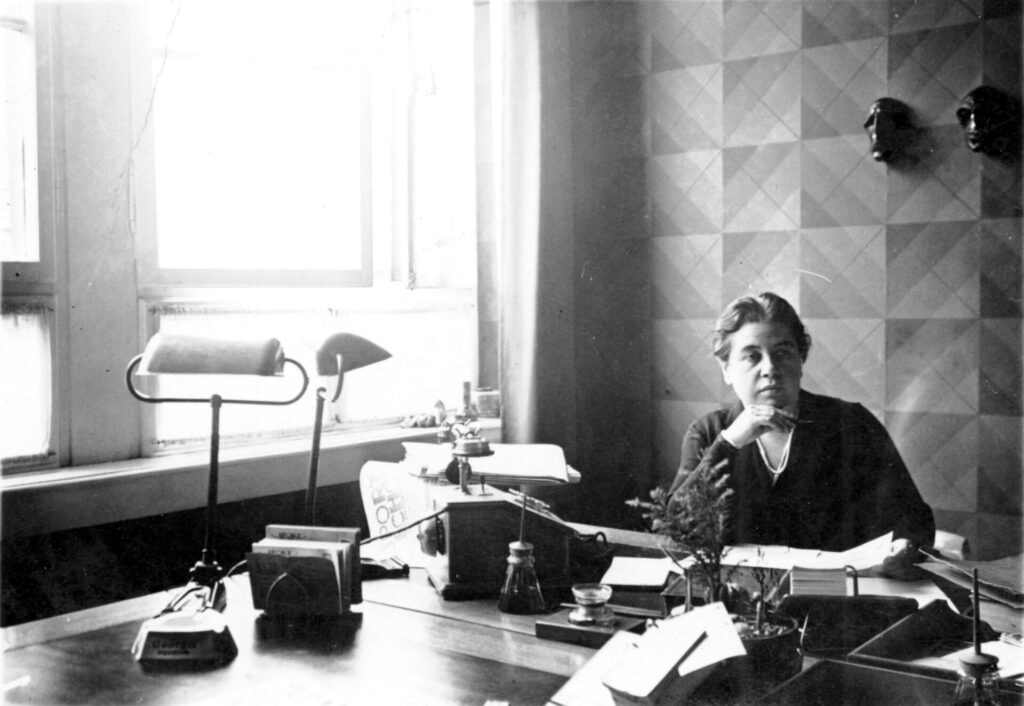
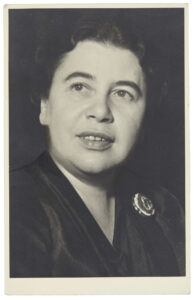
Martha Wertheimer Credit: Jewish Museum Frankfurt
In 1936, in Berlin, three years after the Nazis rose to power, Dr. Martha Wertheimer reissued Fanny Neuda’s prayer book. She did not settle for a mere reprint.
She edited the prayers, adapted them to modern German, added an introduction, and changed the title of the book to Alle Tage deines Lebens: Ein Buch für jüdische Frauen
(“All the Days of Your Life: A Book for Jewish Women”).
This choice, in 1936, is not just a bibliographic detail. It is a profound spiritual, educational, and Jewish act. Precisely at a time when Jewish women in Germany were experiencing humiliation, displacement, fear, and the loss of security, Martha sought to place a prayer book back into their hands. Not a political book. Not a manifesto. A book of words to God. Words from women, for women, in a living, clear, and intimate language.
From the introduction that Martha wrote, it emerges that Fanny’s book was an inseparable part of the world of Jewish women in Germany:
“Our mothers and grandmothers always held Fanny Neuda’s prayer book in their hands, and alongside prayer in Hebrew, they turned to God in their own language, in their mother tongue, when they wished to give thanks and praise in a moment of joy, or to seek comfort in a time of worry.”
Dr. Martha Wertheimer understood that Fanny’s book was not merely a relic of the past. It was a living tool of identity, comfort, and belonging.
Martha Wertheimer Foto: Abraham Pisarek
Dr. Martha Wertheimer was born in Frankfurt to a middle-class Jewish family. She was the daughter of Yehuda Julius Wertheimer and Johanna née Tannenbaum, and the sister of Lidia, with whom she lived for many years.
In 1911, she began her studies at the Academy for Social and Commercial Sciences in Frankfurt, which became the University of Frankfurt in 1914. She studied history, philosophy, and English philology, and in 1919, she became only the fourth woman to receive a doctorate from the university. Her character is already revealed here: an educated, pioneering woman who operated in a world where Jewish women still had to fight for their place in academia, journalism, and the public sphere.
Starting in 1919, she worked as an editor for the liberal newspaper Offenbacher Zeitung. She wrote, edited, lectured, and campaigned for women’s suffrage, sometimes using the pen name Martha Wert. She was a broad-minded journalist, an adult education lecturer, a public figure, and a German Jew who believed in the power of culture, the written word, and education.
Then came the racial laws. In 1933, with the Nazis’ rise to power and the dismissal of Jews from professional positions, Martha was fired from her newspaper job. From that moment, the trajectory of her life changed; she joined the staff of the Jewish newspaper Israelitisches Familienblatt, where she wrote about religious issues, Jewish identity, training for immigration to Israel, and the education of young Jews who needed to prepare for an uncertain future.
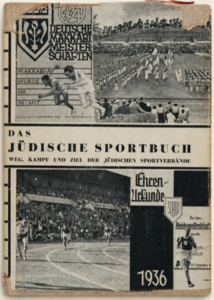
The Jewish Sports Book In 1936, following the exclusion of Jewish athletes from sports organizations in Nazi Germany, Martha Wertheimer took part, along with other partners, in writing this documentary book. The book sought to document the achievements of Jewish athletes and restore their place, dignity, and memory.
Instead of disappearing, she deepened her Jewish activity. In 1936, Martha and her sister Lidia were evicted from their apartment. Martha moved to Berlin, became involved with the Kulturbund Deutscher Juden, worked in Jewish youth and sports organizations, and assisted in training young people for immigration to the Land of Israel. She encouraged Jews to pack up and leave before it was too late, and if they could not leave, to at least send their children.
Within this reality, the publication of a women’s prayer book takes on additional meaning. Martha knew exactly what was unfolding around her. She saw how Jews, including educated, talented women who contributed to German society, were being marginalized, humiliated, fired, and abandoned. And yet, or perhaps precisely because of this, she chose to restore to women a book that reminded them of who they were.
She understood that prayer is not merely a private request. Sometimes, it is a way to maintain human dignity. A way to hold onto an identity. A way of saying: even when the world around me seeks to erase me, I have a language, I have a memory, I have mothers and grandmothers who came before me, and I have someone to turn to.
Martha was not just a prayer book editor. She was a rescuer of children. Between 1938 and 1939, she played a central role in organizing the transfer of Jewish children from southern and southwestern Germany to the Netherlands and England, as part of what would later become known as the Kindertransport.
The late Shifra Friedman
Years later, this story took on a familiar face for me. The late Shifra Friedman, originally from Transylvania, who was my neighbor, told me that she was one of the Kindertransport children and had arrived in London by train. Only now, through this renewed encounter with the figure of Dr. Martha Wertheimer, did Shifra’s personal story connect for me to the broader Holocaust rescue enterprise in which Martha operated. Behind the words “rescuing children” stood real girls and boys, names, faces, and lives that carried on. The children were usually sent alone, without their parents, without their siblings, without the home they knew.
Martha accompanied several of the journeys to England to help settle the children, but she returned to Germany every single time. She could have tried to save herself, but time and again, she went back. When the Kindertransport transports were halted following the outbreak of World War II, Martha continued her relief work. She ran a soup kitchen and residential homes for elderly Jews.
After her sister Lidia’s passport was revoked, she decided to remain with her in Germany. She deepened her involvement in religious life, taking on roles typically reserved for rabbis. Even after suffering a severe leg injury from a bomb that exploded near her apartment, she continued her educational work and established an apprenticeship workshop for Jews.
In 1942, the Gestapo forced her to assist in organizing the deportation of Jews “to the East.”
Shortly thereafter, Martha and her sister Lidia were sent, along with approximately 1,400 of Frankfurt’s Jews, on the third transport that departed on June 11, 1942, most likely to the Sobibor extermination camp.
None of the deportees returned.
And here, within this terrible end, during the Holocaust, the prayer book returns to us.
In 1936, amidst dismissals, eviction from her apartment, fear, and rescue operations,Martha Wertheimer chose to republish Fanny Neuda. She chose to say to Jewish women: you are not alone. There were mothers and grandmothers before you who prayed. There were words written for you. There is a language that can sustain you even now.
She could not have known that the book she edited would be reprinted again even after the war, in the 1950s, and that its editions would continue to appear until the second half of the twentieth century. She could not have known that even many years later, Jewish women would return to Fanny Neuda, and through her, to Martha herself.
In the journey of women’s prayer, Dr. Martha Wertheimer is a key figure. She teaches us that the restoration of a Jewish female voice does not only happen in archives, libraries, or research. Sometimes, it occurs at a dangerous historical moment, when one woman understands that other women are in need of words. Martha carried on Fanny’s legacy, and Fanny carried on the legacy of the mothers and grandmothers. And this voice continues to reach us today.
At the official Holocaust Remembrance Day ceremony at the Israeli Knesset in 2014, I dedicated my words to her:
“I have long wanted to say thank you, Martha.
Thank you for the courage to re-edit a prayer book for Jewish women at a time when Jewish women needed words more than ever.
Thank you for the understanding that prayer can be a source of comfort, identity, quiet resistance, and a way to endure.
Thank you for the link you added to the long chain of women’s prayer.”
Credits and Expansion
This article is based on the story of Dr. Martha Wertheimer and the 1936 edition she edited of Fanny Neuda’s book, Stunden der Andacht, titled Alle Tage deines Lebens: Ein Buch für jüdische Frauen. The quote from Martha’s introduction is taken from the Hebrew edition of Hours of Devotion, edited by Dr. Aliza Lavie and translated by Katya Manor.
The “Women’s Prayer” project began two decades ago as a book that documented and collected Jewish women’s prayers throughout history. The book, which became a bestseller, revealed an entire world that had almost disappeared from our sight – a breathing and vibrant Jewish-feminine space that reflects a Jewish life story that was almost never told through conventional historical tools.
Today, marking 20 years since the book’s publication, we are proud to expand the project to a new format of prayer cards, combining the ancient prayers together with images from a stunning Judaica collection (courtesy of the William Gross Collection, photography: Arnon Barmucha).
The cards are intended for daily use, personal contemplation, family ceremonies and community activities – they invite us to return and reconnect with the rich feminine tradition that passed from mother to daughter throughout the generations.
Women’s Prayer Cards (Tefilat Nashim)
We use cookies to ensure the website functions properly and improve user experience. You can choose which types of cookies to enable.
Join us for women's prayer
A connection to the Jewish story through women’s voices Join to receive sources, prayers, rituals and stories from the Jewish female tradition.