Share:

Facebook
LinkedIn
WhatsApp

Serah bat Asher: Keeper of the Secret of Redemption

Keeper of the Secret of Redemption

There are women whose stories the Bible tells extensively. And there are women
about whom we hear almost nothing, but Jewish memory, and especially women’s memory,
does not let them disappear.
Such is Serah bat Asher.
Her name appears in the Torah twice: in the list of those going down to Egypt, “And the sons of Asher: Imnah and Ishvah and Ishvi and Beriah and Serah their sister” Genesis 46, 17,
and again in the census of those entering the land: “And the name of the daughter of Asher was Serah” Numbers 26, 46.
Two brief mentions. No story. No speech. No description of a deed.
And yet, the traditions of Jewish women across the diaspora and our sages preserved her figure as a wise woman, blessed with longevity, possessing a rare memory, and keeper of the secret of redemption.

How did I meet Serah?

I first learned about the importance of Serah in the world of Jewish women during the work
on the book Women’s Prayer. In a women’s Tisha B’Av ceremony in Kurdistan,
held near the Euphrates River, Serah’s name appeared within a women’s lamentation.
In various communities in Iraq and Kurdistan, men and women used to lament on Tisha B’Av
for Hannah and her seven sons.
Women and girls from the Kurdish community would conduct a eulogy ceremony by the river. They created shapes of graves from the sand,
placed sticks on them as tombstones, circled them and lamented:
“Where is the pit of blood and where is the place of their slaughter,
Woe poor Serah and their seven were slaughtered…”
The question arose immediately: Who is Serah? Why do women in Kurdistan remember her? Why does she appear in the lamentation?
And how did it happen that women in distant communities knew her figure,
while many of us have barely heard her name?
As the journey continued, it became clear to me that women in additional diasporas remembered Serah and attributed to her virtues of healing, memory and redemption.
In the Djerba community, for example, women sang songs of redemption in Judeo Arabic, and in them Serah’s figure appeared.
In Bukharian Jewry, as Dr. Anat Sharbat wrote to me, the name Serah served as a female name until two or three generations ago:
“Serah was my father’s grandmother”.
And suddenly a name that seems distant from the Bible becomes very close.
A grandmother’s name. A woman’s name. A name that carries memory.
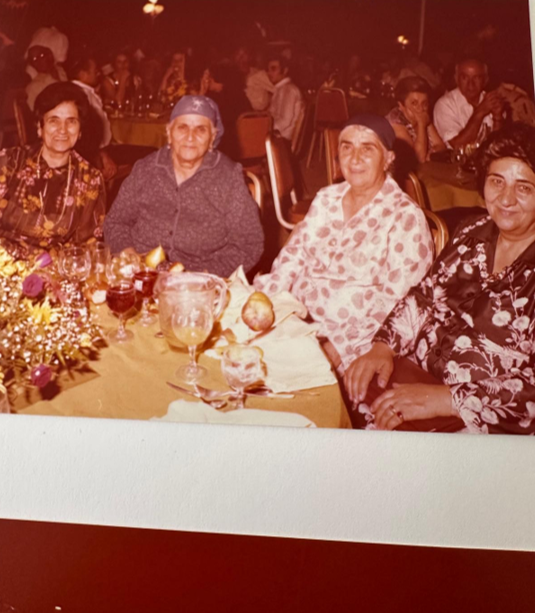
My grandmother Hannah Mashiah, one of the first residents of the Bucharian Quarter, and her sisters of the Cohen family.

Keeper of the Secret

According to Yalkut Shimoni: “Asher ben Jacob passed the secret of redemption to Serah
his daughter”. In another Midrash it is told that the secret of redemption passed from generation to generation: from Abraham to Isaac, from Isaac to Jacob, from Jacob to Joseph, from Joseph to his brothers, and from Asher to Serah his daughter.
When Moses and Aaron came to the elders of Israel and performed signs before them,
the elders went to Serah to find out if this is indeed the time of redemption.
At first she told them that there is no substance in the signs. But when she heard the words “Pakod Yifkod”, she immediately recognized the sign: “He is the man destined to redeem Israel from Egypt, for I heard from my father: Pakod Yifkod.”
At this moment Serah’s strength is revealed. She is not merely a witness from the past.
She is the keeper of the code.
She is the one who holds the correct memory, the exact words, the sign that cannot be forged.
Only when she confirms Moses as the redeemer, can the faith awaken:
“And the people believed”.

The Woman Who Revived the Spirit of Jacob

Another Midrash tells that when the sons of Jacob returned from Egypt to their father,
they feared to tell him suddenly that Joseph was alive,

lest he be frightened and unable to bear the news. On their way they met Serah bat Asher,
a wise and kind hearted maiden who knew how to play the harp, and asked her to precede them and soften the news for Jacob.

Serah sat before Jacob, played the harp and said pleasantly:

“Joseph my uncle is alive, and he rules over all the land of Egypt, and is not dead.”

Jacob heard her words, and they were pleasing to him. When she repeated them again
and again, joy entered his heart,

and the spirit of God was upon him. Then he understood that her words were true.

Jacob blessed Serah and said to her:

“My daughter, may death not rule over you forever, for you have revived my spirit.”

Afterwards his sons arrived, dressed in royal garments, with the chariots and gifts that Joseph sent. When Jacob saw all the signs, he believed the news and was very happy about the message regarding his son.

From here grew the tradition that Serah did not taste the taste of death, and is counted among those who entered the Garden of Eden in their lifetime.

Here too her figure is not a figure of overt power, but of gentle wisdom. She knows when to speak. How to speak.

In what voice to speak. She understands that great news, even news of life, needs to be told in a way that can be absorbed in the heart.

Photography:
Tamar Hayardeni

Location of Joseph’s coffin

Another role attributed to Serah is related to the exodus from Egypt. Before the exodus,
Moses promised to fulfill the oath that the

children of Israel swore to Joseph: “God will surely remember you and you shall carry up my bones from hence” (Genesis 50, 25).

But where is Joseph buried?

According to the Mekhilta, Moses went to Serah bat Asher, “who remained from that generation”, and asked her where Joseph is buried.

She knew. The Egyptians, she told, made him a metal coffin and sank it in the Nile,
so that its waters would be blessed.

Here too, the redemption depends on the memory she holds. Without Serah’s knowledge,
it is impossible to fulfill the promise to Joseph. Without the promise to Joseph,
the exodus from Egypt itself is incomplete.

Serah holds intergenerational knowledge between Jacob and Joseph,
between Egypt and redemption, between ancient memory and the impending future.

“She opens her mouth with wisdom”

Regarding Serah our Sages interpreted the verse from Proverbs:
“She opens her mouth with wisdom” (Proverbs 31, 26)

A wisdom of transmission. A wisdom of memory. A wisdom of one who knows how to keep
a secret until its time comes. Serah knows how to recognize truth.

She knows how to distinguish between an external sign and an internal sign.
She knows that redemption is not only a historical event, but also a memory that passes from generation to generation,

sometimes quietly, sometimes within a family, and sometimes through women whose names were almost erased from the official story.

In this sense, Serah is a foundational figure in the journey of Women’s Prayer.
She reminds us that women preserve knowledge and memory.

They opened timeless paths of transmission, remembered names, graves, promises, secrets, songs, formulas of comfort and redemption.

Serah in the world of Jewish women

In the women’s oral Torah Serah returns in songs, piyyutim and lamentations
that women created and sang in women’s spaces. In Kurdistan she appeared
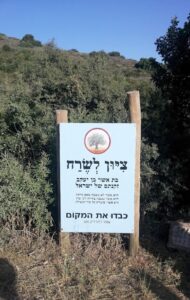
in Tisha B’Av ceremonies. In Djerba they sang about her as part of the poetry of the prophets in Judeo Arabic. In Persia they showed her grave in the village of Lenjan,
near Isfahan, and Jews saw the place as a holy place. In Bukhara, as mentioned,
her name was preserved as a living female name until a few generations ago.

All these teach that Serah’s figure did not remain only in the Midrash.
She lived in tradition. She passed between women. She appeared in lamentations,
in songs, in grandmothers’ names, in communal memories and in folk belief about healing and redemption.

And here the painful question arises: Where and when was this knowledge lost?
How did it happen that many Jewish women no longer know Serah, even though
in other communities she was remembered, sung, called by name, and considered
a figure of blessing?

The journey following Serah is also a journey following a severed women’s memory. And it invites us to restore it.

When a Name Becomes a Pride

After I spoke about Serah in one of the weekly Torah portions, I received a response that moved me particularly:

“Hello Aliza. I saw and heard your commentary on the weekly portion on Channel 1 and I was very moved. My middle name is Serah. For many years I was ashamed of it, even though it is named after my grandmother, and now you have strengthened my pride a little, that she is a special and significant figure for our people.
So thank you and Shabbat Shalom.”

This is perhaps the essence of the work of Women’s Prayer. Not just to return texts.
Not just to locate customs.

But to restore to a woman the pride in her name, in her grandmother, in her tradition,
in a voice that was forgotten.

Serah bat Asher teaches that women’s memory is not marginal to the story
of redemption. Sometimes it is the condition for it.

She is the one who knows the secret. She is the one who knows where Joseph
is buried. She is the one who succeeds in conveying news without breaking the heart. She is the one who recognizes the redeemer when he arrives.

And therefore Serah is not just an enigmatic biblical figure.
She is a symbol of the power of women to carry memory, to heal a fracture, to identify hope, and to pass on the secret of redemption.

Sources and Further Reading

Genesis 46:17; Numbers 26:46; Genesis 50:25; Exodus 13:19.
Yalkut Shimoni, Parashat Lech Lecha; Pirkei DeRabbi Eliezer, chapter 48; Mekhilta de-Rabbi Ishmael, Beshalach;
Mekhilta de-Rabbi Shimon bar Yochai 13:19.
Midrash HaGadol to Genesis 45:26; Sefer HaYashar; traditions on women’s singing in Kurdistan and Djerba;
Ze’ev Vilnay, Holy Tombstones in the Land of Israel.
And also: Aliza Lavie, Women’s Prayer, and the testimonies collected as part of the journey to restore the Jewish-female voice.

About Us | Women's Prayer Project

The “Women’s Prayer” project began two decades ago as a book that documented and collected Jewish women’s prayers throughout history. The book, which became a bestseller, revealed an entire world that had almost disappeared from our sight – a breathing and vibrant Jewish-feminine space that reflects a Jewish life story that was almost never told through conventional historical tools.

Today, marking 20 years since the book’s publication, we are proud to expand the project to a new format of prayer cards, combining the ancient prayers together with images from a stunning Judaica collection (courtesy of the William Gross Collection, photography: Arnon Barmucha).

The cards are intended for daily use, personal contemplation, family ceremonies and community activities – they invite us to return and reconnect with the rich feminine tradition that passed from mother to daughter throughout the generations.

Our Books

Women’s Prayer Cards (Tefilat Nashim) We use cookies to ensure the website functions properly and improve user experience. You can choose which types of cookies to enable.
Cookie Selection


Join us for women's prayer

A connection to the Jewish story through women’s voices
Join to receive sources, prayers, rituals and stories from the Jewish female tradition.