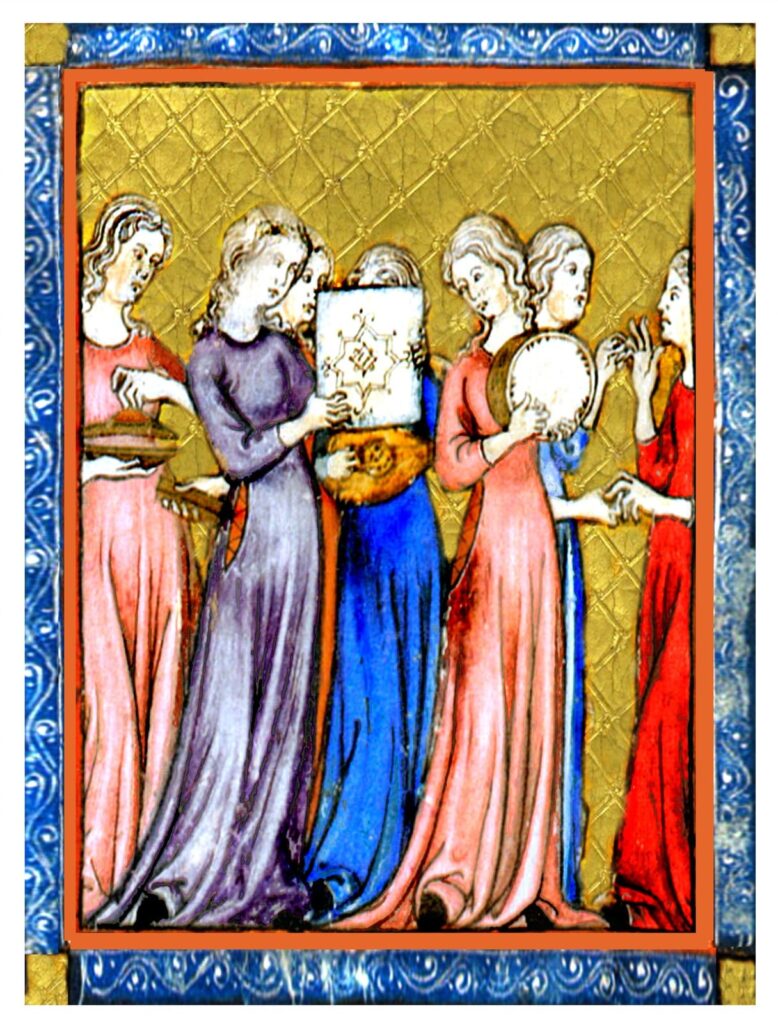
Excerpt from the article:
The Uniqueness of Female Thinking in Previous Eras
In my search for the uniqueness of the female mindset and its characteristics,
so that I could point to its potential to offer a creative pattern for solving the problems of the era, I delved deeply into various disciplines from Rabbinic literature to neuroscience.
I sought to find clues to the uniqueness of the female way of thinking, those that would point
to the nature of its future contribution to the evolving narratives in the State of Israel.
Most researchers in neuroscience, even if not all, still hold the view that there is a clear distinction between the way the female brain processes reality and that of the male brain.
In general, the female brain is apparently wired for multitasking, meaning it moves quickly
from one thing to another and collects and integrates many inputs. Some call this trait
“web thinking.” It is wired to feel empathy, to create synthesis, and to think non-consecutively and long-term. The male brain, by contrast, is wired to think systematically, logically,
and linearly. It is structured to allow the man to focus, compartmentalize, and think consecutively so that he can achieve short-term goals. However, distinctions of this type provide nothing of value that would help us identify the development vector of the Israeli identity narrative in the future and its current problem-solving pattern, especially since some challenge their validity from psychological and neurological perspectives.
Curiously, the literature I found that has something to offer on this issue is the Midrashic literature that developed over many generations, and specifically the Midrashim dealing
with the uniqueness of the prophetesses. Examining the nature of the prophecy and leadership of the biblical prophetesses and the difference between their prophetic style and that of the other prophets can point to a unique female mindset in problem-solving, at least according to the Midrashim, and to the potential contribution inherent in it in the Fifth Era.
In total, seven prophetesses can be counted who prophesied throughout all the periods described in the Bible: Sarah, Miriam, Deborah, Hannah, Abigail, Huldah, and Esther.
Over the years, hypotheses were raised regarding the uniqueness of their prophecy
and explanations were offered as to why they merited inclusion in the list of spiritual leaders
in Jewish history. It seems there were other prophetesses, such as Noadiah (Nehemiah 6, 14), who were not included in the list of seven that the Midrashim usually count.
What then was the determining criterion for being included in this distinguished list,
and what was their common denominator? Examining the nature of Deborah’s leadership
and prophecy, for example, as well as the leadership nature of the other prophetesses
and especially of Esther, about whom an entire scroll was written, reveals that their prophecy was active and creative, meaning their view of reality was active and innovative.
It is known that Deborah was involved up to her neck in the politics and power struggles
of those days. One of the episodes in which she starred clearly illustrates this.
From her seat in the mountains of Ephraim, she summoned Barak son of Abinoam
from Kedesh-Naphtali a vast distance in those days. Examining the verse that the Talmud chooses to describe Deborah with teaches us much: “And Deborah was a ‘woman of flames’ (Eshet Lapidot), what is a woman of flames? That she used to make wicks for the Temple” (Megillah, 14). This sentence raised wonder among commentators, for what did the Sages see in Deborah that from all her deeds and status they emphasized specifically her ability to weave wicks? How does this encapsulate her personality? Does her prophetic consciousness find expression in this? According to some of them, it is possible that the explanation for her name points to the fact that the essence of her prophetic style is action and creation.
These were expressed in inner chambers and also under the open sky, where she prophesied in front of the whole world while sitting under a palm tree between Ramah and Bethel.
Between herself and her soul, Deborah wove wicks for the Menorah, and in the political field, she summoned a general and enlisted to change the geopolitical reality.
These two anecdotes in her life history, which are seemingly not important at all to the content of her prophecies, point to her practical and creative style and mindset in problem-solving
and in her decision-making process as a leader. Huldah’s prophecy as well, which appears
in the annals of the nation at a decisive period, reflects a similar mindset.
In an attempt to avoid the calamity of the destruction of the First Temple, King Josiah tries
to initiate a religious reform, in the hope that the evil decree will be canceled.
For this purpose, he turns to Huldah for help, and she addresses him with the term “man”
and not by his title “king.” 800 years later, the Sages of the Talmud asked why he did not
turn to Jeremiah, who was the senior prophet at the time, and how she allowed herself
to address him by the inferior title “man”? They concluded that it was necessarily
“because women are compassionate.”
But this inference is also curious, for what is the connection between them being compassionate and the reform in the religious narrative that Josiah sought to lead to prevent destruction? One of the explanations the Midrash raises is related to the character
and mindset of Jeremiah, who was supposed to lead the reform based on his seniority status at that time. It seems that Jeremiah, who prophesied extensively about the bleak state
of the Kingdom of Judah in the generation before the destruction, was a relative of Huldah.
The difference between his prophecy and hers screamed to the heavens even then and it is what influenced Josiah’s decision to seek Huldah’s help from among all the prophets
of the period and there were quite a few of those, besides Jeremiah. It is possible that Josiah was not only interested in the objective view of the present and the reliable forecast regarding the future that Jeremiah could have given him, by virtue of his status as a thinker and prophet, but was interested in inspiring spiritual leaders capable of changing reality.
According to this possible explanation, the quality of compassion in a woman is the mental template capable of changing the future and not just predicting it.
The prophetess is a proactive person, equal in status to the one at the head of the earthly pyramid whose job is to change reality the king. It is not surprising, then, that Huldah saw Josiah as a “man” and not as a “king,” since he is to some extent parallel to her,
and it is possible that because of this he sought her help and not the help of Jeremiah,
who only knew how to warn at the gate and not to change reality.
According to this explanation, Jeremiah’s prophetic mindset was characterized by an analysis of the moral and religious reality of the people and its rulers and by warnings regarding
its consequences. One could define his style as an “observer,” meaning passive.
However, in times of distress, Josiah demanded an active and decisive act.
As one who knows how to instill empathy in her deeds, he specifically asked Huldah to enlist
for the mission. Only in this way did he think it might be possible to save the people
from the calamity that Jeremiah predicted.
In the same way, it can be said that the uniqueness of the
thinking of Sarah and Miriam lies in their practical style.
Of Sarah it was said, “all that Sarah says to you – listen to her voice” (Genesis 21, 12).
This statement highlights her entrepreneurial and practical mindset, which God extols.
Miriam also receives similar treatment from her father. After she prophesied about the birth
of Moses and said: “My mother is destined to give birth to a son who will save Israel”
(Exodus Rabbah 1, 22), she was required by her father to also act to protect Moses
so that her prophecy would be fulfilled. The Midrash notes: “And when they cast him into
the Nile, her father stood and tapped her on her head and said to her:
‘My daughter, where is your prophecy?'” (Megillah 14). For this reason it is written,
“And his sister stood from afar ‘to know’ (Exodus 2, 4) – to know what would be the outcome
of her prophecy. “This consciousness led Miriam to initiate the reunion of Moses with his nursing mother and ensured that the connection between him and his destiny would not be severed.
The remaining three prophetesses, Hannah, Abigail, and Esther, are also characterized
by an act they did of their own initiative related to the Kingdom of Israel and its revival.
It turns out that this entrepreneurial consciousness, which some have called “creative prophecy,” characterizes the female consciousness. Esther, for example, attained the throne and saved her people from destruction in that generation. The verse that illustrates the nature of her leadership is: “And Esther clothed herself in royalty” (Esther 5, 1).
This verse marks a dramatic turning point in the way Esther conducted herself. All at once, she transformed from a dependent and passive girl, who was taken to the palace, into an active personality, believing in her ability to change the evil decree and bring redemption to her people. And so, after a series of fasts and prayers, she began to act with a high hand.
Step by step, while using her charms in a sophisticated manner, she brought about the victory of justice and the rescue of her people. Her activity did not cease with the victory. Afterward, she worked to memorialize it so that future generations would also learn the message.
The prophecy of these women did not focus on reproof for the sins of the past and present, but was directed toward creating a different future. The inner vision of the prophetesses, together with their belief in the ability to change reality, gave them the strength to rise and act with determination and tirelessness to fulfill their vision, for the sake of their people. The seven prophetesses revealed themselves in times of crisis. They were key figures and acted out of confidence in the power of their faith to change reality. Each of them stood at the threshold of significant days in the history of the nation, saw what was to come and preceded her time in establishing the foundations for its building. At the gates of many other periods throughout thousands of years of Jewish history, there also stood women who were filled with a spirit of prophecy, even if it was not prophecy in the biblical sense. For example, the fire of the rebellion against the Greeks was ignited, according to the Midrashim, by a daughter of the Hasmonean family whose name is unknown, who stirred her brothers to rebel through a provocative act, because they had not agreed to do anything in the ongoing situation of the humiliation of women by the authorities. Like her, in every generation, even in the face of very difficult circumstances, there stood women who breathed a spirit of faith and confidence in redemption and acted with this power of theirs for the strengthening of the people. It seems that women are called again to lead the people at the beginning of the Fifth Era, in an active spirit and with deep feelings of empathy. Because of the power of their mindset to give life in times of crisis, at the threshold of difficult beginnings, they will likely be called to the flag once again.
Based on an article by Prof. David Passig, Futurist, Bar Ilan University,
from the book The Fifth Fiasco :or How to Escape the Traps of Jewish History in the Twenty-First Century, Cambridge Scholars Publishing