Bohemia, 1855
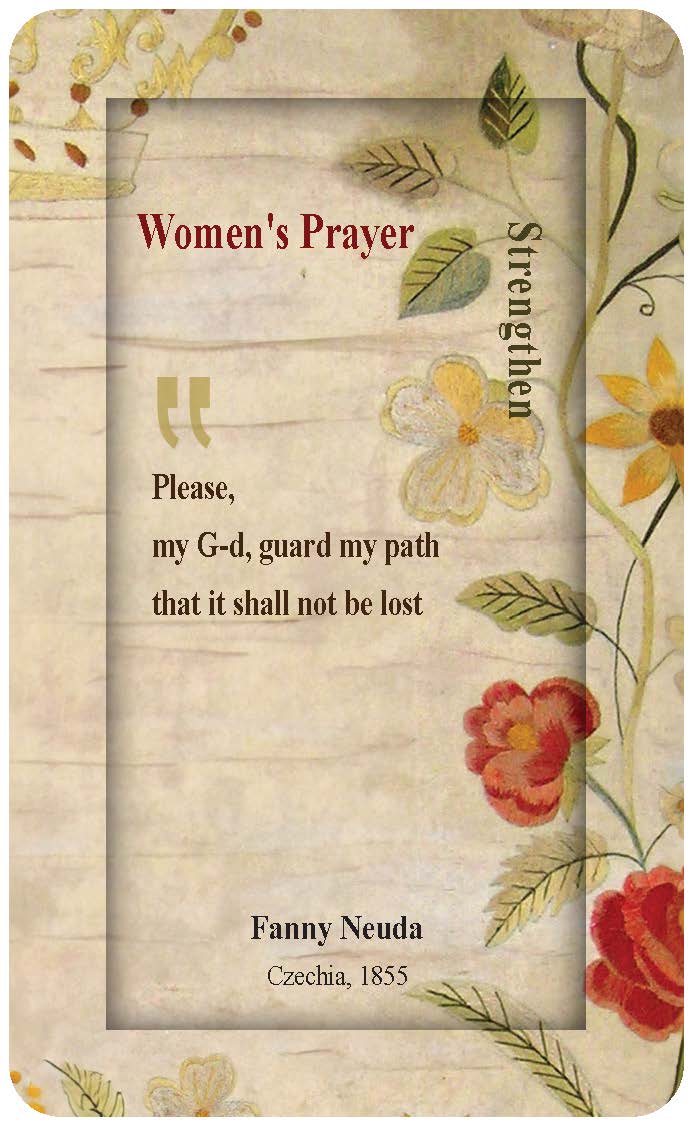
word of inspiration: Strengthen
The year 1855 was a time of upheaval: secularization, change in the status of women, waves of immigration and the beginning of the influence of the surrounding culture on the Jews. Fanny Neuda’s request, “Guard my path” , is not only a personal plea but also a reflection of a Jewish-feminine identity that seeks to be preserved and heard even in an era
when traditional identity frameworks were weakening.
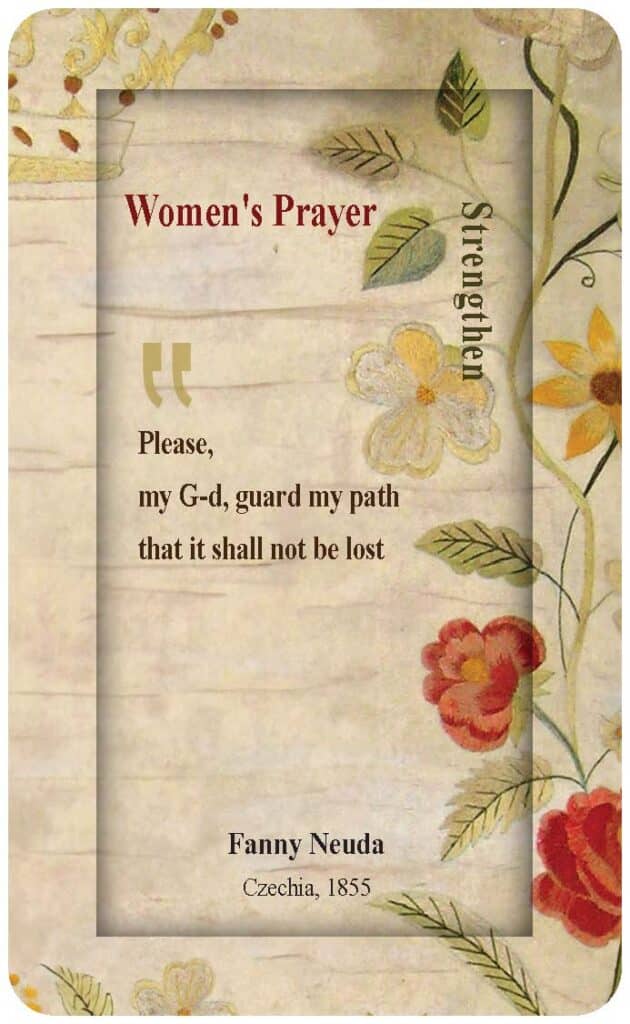
The card “Please, my G-d, guard my path that it shall not be lost” carries within it a movement of searching, reverence and a gentle plea for a clear way in a changing world. It is a prayer that echoes the voices of many women throughout the generations, women who held fast to faith even more so when everything around them was collapsing, women who continued even when they had lost the signs along the way.
The short sentence is written in simple and direct language, yet it carries emotional depth, a quiet prophecy and courage. Like all of Fanny Neuda’s life’s work, quoted in other cards as well, this card seeks to make it possible for women to pray in a language that is close to the heart.
The prayer on the card was written by Rabbanit Fanny Neuda, an educator, creator and spiritual figure who lived in Bohemia in the 19th century. She was the first Jewish woman to write and publish a prayer book for women and girls in the German language, out of a sense of mission and a desire to bring women who did not know Hebrew back into the Jewish world of prayer.
Her book Hours of Devotion, first published in 1855, became a bestseller across continents and cultures. It was passed from mother to daughter, serving as a source of comfort and prayer for women in Europe,
the United States and Israel, placed sometimes instead of the traditional prayer book and sometimes alongside it.
In her writing, Fanny blazed a trail, creating personal, human and precise prayers: for a bat mitzvah, for a bride, for a woman giving birth, for a mother whose son was ill, for women who experienced loss or loneliness
and for those seeking livelihood, love or strength. Fanny hoped that:
“Prayers born out of the experiences of a woman will find an echo in the hearts of women and give them strength, comfort and elevation of spirit”.