We all know Esther. The beautiful queen, the heroine of the Scroll of Esther and of the holiday of Purim.
But Esther is much more than a beautiful queen.
When she first appears in the scroll, Esther is an orphaned girl: quiet, shy, obedient. She grows up in the home of her cousin Mordechai, she is taken to the palace, and is chosen to be queen after Queen Vashti is removed.
Yet in the storm of events, Esther changes. She matures, awakens, and takes command.
When a decree is issued to annihilate all the Jews, Mordechai turns to her, and she, out of natural fear, hesitates.
Mordechai rebukes her, and then comes the turning point: Esther rises.
She transforms from being led to becoming a leader. She takes responsibility, asks the people to fast for three days and to pray.
Esther does not hesitate to argue a halakhic point with Mordechai the Jew, and he listens to her opinion and acts according to her instruction.
Only when Esther sees that the people are united and fasting for three days does she stand before King Ahasuerus, with courage, at personal risk, and with strategic wisdom.
She identified the weak point of both the king and Haman: their love of banquets and feasts. With wisdom, she invited them not once but twice. At the critical moment, she exposed Haman’s wicked plan to annihilate all the Jews, while keeping Ahasuerus on her side and in favor of the Jews.
With her wisdom she saved the Jews: Ahasuerus rallied to their cause, the decree was overturned, Haman was hanged on the gallows, and Mordechai became second to the king in the palace.
Beyond all this, Esther understood the importance of documenting the event and passing on its story to future generations. She insisted that it be included in the Jewish Bible.
With one verse “Go, gather all the Jews”she changed her own status and the history of all Jewish people. From that moment on, she led. And Mordechai? “And he did just as Esther had commanded him” (Esther 4:17).
More information on Queen Esther can be found in my books Women’s Customs (currently available in Hebrew) and Iconic Jewish Women.
The Prayer of Queen Esther. A woman’s voice in a time of concealment
Esther is one of the seven prophetesses and was endowed with divine inspiration. She wrote the Scroll of Esther and demanded of the sages of her generation, who initially opposed it, that the scroll be preserved for all generations: “Write me for the generations.”
The opposition to including the scroll in the Bible was removed, and her request was accepted. The sages saw her as someone who could see far ahead. Not only the danger of annihilation in her own days but also the long centuries of exile to come.
The Scroll of Esther, with no mention of G-d’s name and no overt miracle, is testimony to faith in the midst of hiddenness.
Queen Esther and Women Throughout the Generations
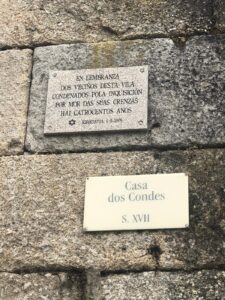
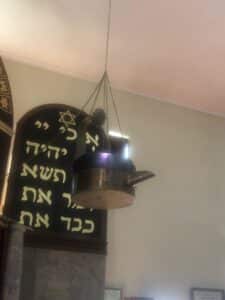
Many women found in Queen Esther a source of identification and inspiration. Especially the women among the Anusim (Marrano, the forced converts) in Spain and Portugal, who, like Esther, had to conceal their Jewish identity.
In those harsh days under the rule of the Inquisition (the Catholic Church’s tribunal), Jews who lived with double identities as “New Christians” were cruelly persecuted for any expression of Jewish observance. Fear was daily reality, and the religious-communal space withered. Mitzvot were kept only within the walls of the home.
And it was precisely there, behind shuttered windows, that the role of women stood out.
They became the guardians of the flame. Lighting candles, whispering prayers, keeping traditions, and passing memories from mother to daughter.
Like Esther, who was cautious, silent, and acted at the right moment, they too needed quiet strength, deep faith, wisdom, and action borne of responsibility.
They particularly preserved Esther’s memory through the observance of the Fast of Esther: three days of fasting, done secretly and at risk to their lives, to pray with body and soul that the decree be overturned and that what had helped Esther then would help them now.
Esther became a symbol, a role model, and a partner on the journey for women whose inner faith burned quietly.
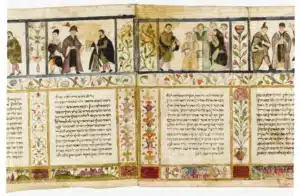
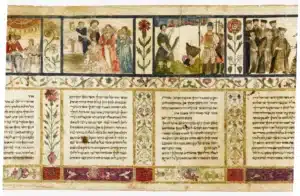
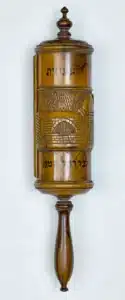
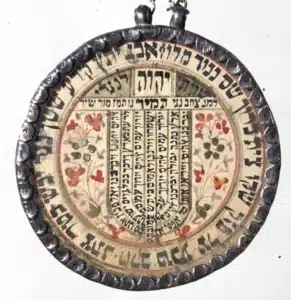

Agam Berger, inspiration in Hamas Captivity
Esther’s figure speaks even today.
The testimony of Agam Berger, a survivor of the terrorist organization Hamas’ captivity, make the heart quiver and continues the fine thread Esther wove between silence and action, between fear and faith.
During captivity, Agam recounted, they suddenly received prayer books:
“They just gave them to us, and it kept us together. We prayed, we kept track of the calendar, tried to keep the holidays… On Passover I avoided chametz (leavened bread), on Yom Kippur we fasted, and even on the Fast of Esther I felt I had to fast.”
Agam told that under especially harsh conditions of captivity, and out of lack of knowledge, she observed the Fast of Esther from sundown the previous evening, fasting for more than a full day and night. By choice, out of faith.
Like Esther, she too sought to join the chain of Jewish women who prayed and kept silent, concealed and held on, and in quiet were saved.
Esther teaches us that every woman carries within her the Jewish-feminine DNA, the wisdom of our mothers across generations and the capacity to bring change.
She invites each of us to recognize our own power, to ask when it is right to act, and to know the power of women’s prayer.
The Prayer of Queen Esther
And afterward she raised her voice in prayer and said:
You are the great G-d, the G-d of Abraham, Isaac, and Jacob, and the G-d of Benjamin my father. It is not because I am in your favor that I come before this king, but for the sake of Your people, the house of Israel, that they not be vanished from this world. For it is for the sake of Israel that You created the entire world, and if Israel were to be lost from the world, who would say before You ‘Holy, holy, holy’ three times each and every day? As You have saved Hananiah, Mishael, and Azariah from the fiery furnace, and Daniel from the lions’ den, so save me now from the hand of this foolish king, and grant me favor and kindness in his eyes.
With tears Esther said these words, and with supplications she laid out her prayer:
I beg of You, Hearer of prayers, hear my prayer at this moment. We have been exiled and distanced from our land, and through our sins You have sold us, so that what is written may be fulfilled in us: ‘You shall be sold there to your enemies as slaves and maidservants, but no man shall buy you’ (Deuteronomy 28:68).
A decree has been issued to destroy us, and we are all delivered to the sword, to slaughter, to loss, to complete annihilation, every last one of us. The seed of Abraham wears sackcloth and casts ashes upon their heads. If the fathers have sinned, what has been the sin of the children? If we are lost, who will yet give thanks before You? If the infants have sinned and angered You, what have the nursing babes done? The inhabitants of Jerusalem will stir in their graves, for You have given over their children to slaughter. Like clouds of the heaven You pass us along. How few are the days of our joy! To Haman the wicked You have given us, and into the hand of our enemies to destroy us.
I bring before You the deeds of Your beloved: from Abraham I will begin saying. You tested him with all the trials, You examined him and found his heart faithful before You. Be a supporter and helper to the children of Your beloved. Gather them in the sign of the covenant. Plead our case against Haman, and avenge us upon the son of Hammedatha by the hand of Your people Israel. The enemy who oppresses Your people has sought to destroy us like one sheep, and he has become their foe in all their dwelling places. You swore to us an eternal covenant oath. The binding of Isaac may it lift us up. Haman cast the silver before the king to purchase us with ten thousand talents of silver. Hear our voice, answer us, and bring us out of distress into relief. Break our enemies, break Haman, and let there be no rising from his downfall. (1)
O Lord, G-d of Israel, who has ruled from ancient days, Creator and Maker of the entire world and Master over it, help now Your handmaid who is alone and has no other helper but You. For alone I sit here, and alone am I in the king’s house, without mother or father. Like a poor orphan who begs from house to house, so I have begged Your mercy from window to window in the house of King Ahasuerus, from the day I was taken here until this very day. And now, my G-d, here is my soul, take it from me if it is good in Your eyes, and if You do not wish to take it, then save the flock of Your pasture from these lions who have risen against them.I will change my garments of glory and my royal crown upon my head, for I have not rejoiced from the day I was brought here, except in You. (2)
1) Behold, thus sounds the translator’s introduction from the Hebrew translation of the so-called Second Targum, “Patshegen HaKetav”: “a Second Targum on the Book of Esther in the Hebrew language, easy to understand for all of our people who did not know the language of the Targum… and in order to… act according to the will of every man who does not understand… and also for women I composed… the words of this scroll in the Ashkenazi language…”
Aharon son of Rabbi Mordechai of Trebitsch (5630 [1870]), Vilna.
2) Sefer Yosippon, ch. 4, ed. David Flusser (Jerusalem: Zalman Shazar Center, 1978) (The original text, a photograph of the manuscript with additions.)
About Us | Women's Prayer Project
The “Women’s Prayer” project began two decades ago as a book that documented and collected Jewish women’s prayers throughout history. The book, which became a bestseller, revealed an entire world that had almost disappeared from our sight – a breathing and vibrant Jewish-feminine space that reflects a Jewish life story that was almost never told through conventional historical tools.
Today, marking 20 years since the book’s publication, we are proud to expand the project to a new format of prayer cards, combining the ancient prayers together with images from a stunning Judaica collection (courtesy of the William Gross Collection, photography: Arnon Barmucha).
The cards are intended for daily use, personal contemplation, family ceremonies and community activities – they invite us to return and reconnect with the rich feminine tradition that passed from mother to daughter throughout the generations.