
Throughout the years of research and journeying in the footsteps of feminine prayers, one prayer came up again and again, its words voiced by women from different generations and diverse communities: Nishmat Kol Chai.
Some women know the entire prayer by heart, others recall only a line or two.
Even if only as a whisper, a distant memory, or a longing.
Nishmat Kol Chai is not only a prayer from the prayer book, it is part of women’s spiritual memory.
It is recited at the end of Pesukei deZimra on Shabbat, appears in the Haggadah on Seder night,
yet lives also beyond the prayer book:
a prayer that continues to be spoken at home, in the heart, in silence, in the inner rooms of the feminine soul.
Home » Blog » Custom and prayer » Nishmat Kol Chai
Share:
Facebook
LinkedIn
WhatsApp
Nishmat Kol Chai
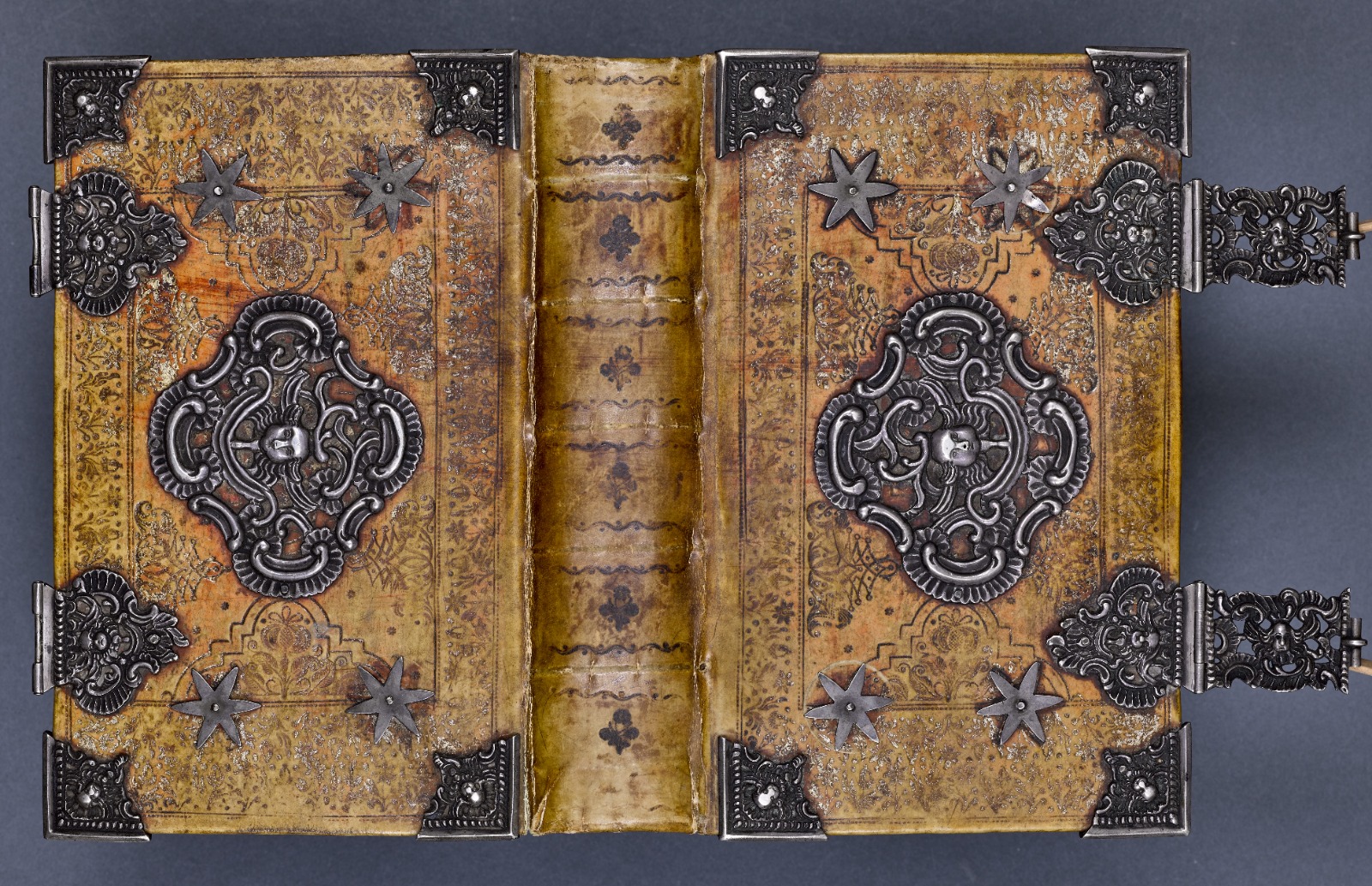
When and why do women say Nishmat Kol Chai?
Over the generations many special qualities were attributed to the prayer:
For gratitude: for healing, deliverance, safe birth, or return from captivity.
For protection: for pregnant women, family members, or during an unknown journey.
For healing and holding: in birth rituals, celebrating the birth of a girl, life-cycle ceremonies, and women’s circles.
Often, especially in the communities of Morocco, Iraq, Poland, and Yemen, women would say the prayer
after childbirth, alone or together with female relatives.
During pregnancy, as a request for protection.
In times of plague, war, and wandering.
Even today, many women pray Nishmat Kol Chai after a medical challenge, in the quiet of night, in personal gratitude ceremonies, in circles of prayer and healing, and also when the heart simply calls, when there is a need.
A prayer in nights of worry
In many homes, the prayer is whispered during long nights.
When soldiers are in the field, when deep worry rises, or when longing does not quiet.
Mothers, sisters, and grandmothers hold onto it.
During the Iron Swords War, many women shared that they began saying the prayer again, each night.
At prayer gatherings, in virtual groups, and in women’s circles, its presence was especially strong.
When asked: “Where does this come from?”
They answered: “My mother always said it.”
“It just felt right.”
A kind of golden thread between generations, passing through women’s hearts, remembering.
Why specifically Nishmat Kol Chai?
Nishmat Kol Chai is a liturgical poem and a prayer of choice, not of obligation.
Women choose it of their own accord, out of connection rather than command.
Perhaps the prayer resonates because of the ancient poetic language of its author, whose identity remains uncertain.
Perhaps because of its literary beauty. The language is rich, yet accessible. It is full of imagery of body, voice, and breath, and allows space even for one who does not master all its words.
And perhaps because it is a prayer of life, of breath, of gratitude, and of recognition that the heart is beating.
A feminine voice through the generations
Nishmat Kol Chai is a reminder:
Even when we have no words of our own, yet feel a need to express what is within, we can always return to the words that supported women before us in difficult moments, words that echo across generations.
And we can let them be spoken in our own voice.
Share with us
When did you say Nishmat Kol Chai?
Do you remember from whom you learned the prayer?
And if this is your first time encountering it, what does it awaken in you?
Click here to share a short testimony, memory, or thought
Nishmat Kol Chai – The Soul Of Every Living Thing
The soul of every living being shall bless Your Name, Hashem our G-d, the spirit of all flesh shall always glorify and exalt Your remembrance, our King. From this world to the World to Come, You are G-d and other than You we have no king, redeemer, or savior. He who liberates, rescues and sustains, answers and is merciful in every time of distress and anguish, we have no king, helper or supporter but You!
G-d of the first and the last, G-d of all creatures, Master of all Generations, Who is extolled through a multitude of praises, Who guides His world with kindness and His creatures with mercy. Hashem is truth; He neither slumbers nor sleeps. He Who rouses the sleepers and awakens the slumberers. Who raises the dead and heals the sick, causes the blind to see and straightens the bent. Who makes the mute speak and reveals what is hidden. To You alone we give thanks!
Were our mouth as full of song as the sea, and our tongue as full of joyous song as its multitude of waves, and our lips as full of praise as the breadth of the heavens, and our eyes as brilliant as the sun and the moon, and our hands as outspread as the eagles of the sky and our feet as swift as hinds — we still could not thank You sufficiently, Hashem our G-d and G-d of our forefathers, and to bless Your Name for even one of the thousand and thousands of thousands and myriad myriads of favors, miracles and wonders that you performed for our ancestors and for us.
At first You redeemed us from Egypt, Hashem our G-d, and liberated us from the house of bondage. In famine You nourished us, and in plenty you sustained us. From sword you saved us; from plague you let us escape; and from severe and enduring diseases you spared us. Until now Your mercy has helped us, and Your kindness has not forsaken us. Do not abandon us, Hashem our G-d, forever.
Therefore, the organs that you set within us and the spirit and soul that you breathed into our nostrils, and the tongue that you placed in our mouth – all of them shall thank and bless and praise and glorify, exalt and revere, be devoted, sanctify and declare the sovereignty of Your Name, our King. For every mouth shall offer thanks to You; every tongue shall vow allegiance to You; every knee shall bend to You; every erect spine shall prostrate itself before You; all hearts shall fear You; and all innermost feelings and thoughts shall sing praises to Your name, as it is written: “All my bones shall say, Hashem who is like You? You save the poor man from one who is stronger than he, the poor and destitute from the one who would rob him.”
The outcry of the poor You hear, the screams of the destitute You listen to, and You save. And it is written: “Sing joyfully, O righteous, before Hashem; for the upright praise is fitting.”
By the mouth of the upright You shall be exalted;
By the lips of the righteous shall You be blessed;
By the tongue of the devout shall You be sanctified;
And amid the holy shall You be lauded.
And in the assemblies of the myriads of Your people, the House of Israel, it is the duty of all creatures, before you O Hashem, our G-d and G-d of our forefathers to thank, laud, praise, glorify, exalt, adore, render triumphant, bless, raise high, and sing praises – even beyond all expressions of the songs and praises of David, the son of Yishai, Your servant, Your anointed.
About Us | Women's Prayer Project
The “Women’s Prayer” project began two decades ago as a book that documented and collected Jewish women’s prayers throughout history. The book, which became a bestseller, revealed an entire world that had almost disappeared from our sight – a breathing and vibrant Jewish-feminine space that reflects a Jewish life story that was almost never told through conventional historical tools.
Today, marking 20 years since the book’s publication, we are proud to expand the project to a new format of prayer cards, combining the ancient prayers together with images from a stunning Judaica collection (courtesy of the William Gross Collection, photography: Arnon Barmucha).
The cards are intended for daily use, personal contemplation, family ceremonies and community activities – they invite us to return and reconnect with the rich feminine tradition that passed from mother to daughter throughout the generations.